Ultimate Guide Microdermabrasion: What to Know
This ultimate guide microdermabrasion resource picks up where our narrower articles on histology, FDA classification, and aftercare left off, focused specifically on how the three real delivery systems actually compare.
Crystal, diamond-tip, and hydrodermabrasion systems all genuinely exfoliate the stratum corneum, but no head-to-head clinical trial establishes any one system as superior to the others — most comparative claims trace back to marketing, not controlled research. At-home devices use deliberately gentler suction and abrasives for safety, and no peer-reviewed trial directly compares their results to professional in-office treatment.
Powered at-home devices and simple manual brushes also sit in two different FDA regulatory tiers, and real contraindications — rosacea, active viral infections, known aluminum allergy — are worth knowing before booking any system.
This guide covers the real system-by-system comparison, typical costs, and exactly who should skip mechanical exfoliation altogether.
Recommended Microdermabrasion Devices and Aftercare Products
Microdermabrasion, the Complete Picture
Microdermabrasion has been covered from several specific angles already — its histological evidence and FDA classification, the hair-removal myth, and aftercare specifics. This guide fills in the pieces those narrower articles didn’t cover: how the three main delivery systems actually compare, what the real evidence gap is between at-home and professional devices, typical costs, and the specific skin conditions where this treatment is genuinely not recommended.
Key Points
- Crystal, diamond-tip, and hydro systems all exfoliate the stratum corneum, but no head-to-head trial establishes one as clinically superior to the others.
- At-home devices use lower suction and gentler abrasives specifically because untrained use of professional-strength suction risks bruising.
- No peer-reviewed trial directly compares at-home device outcomes to professional in-office results — a genuine evidence gap.
- Powered at-home devices and simple manual brushes sit in two different FDA regulatory tiers.
- Rosacea, active viral infections, and known aluminum allergy (for crystal systems specifically) are real, specific contraindications.
- Typical professional sessions run $75-200 each; at-home devices are a one-time cost around $100-250.
Guide Contents
- Microdermabrasion, the Complete Picture
- Crystal vs. Diamond-Tip vs. Hydro: How They Differ
- What the Comparative Evidence Actually Shows
- At-Home vs. Professional: The Real Evidence Gap
- FDA Classification: Powered vs. Manual
- What It Actually Costs
- What a Professional Session Looks Like
- Step by Step: Choosing a System
- Who’s a Good Candidate
- Who It’s Genuinely Not Recommended For
- When to See a Dermatologist Instead
- A One-Minute Check Before You Book
- Where the Evidence Runs Out
- Combination Devices vs. Standalone Microdermabrasion
- Why Sessions Are Spaced Around the Skin’s Turnover Cycle
- Frequently Asked Questions
Crystal vs. Diamond-Tip vs. Hydro: How They Differ
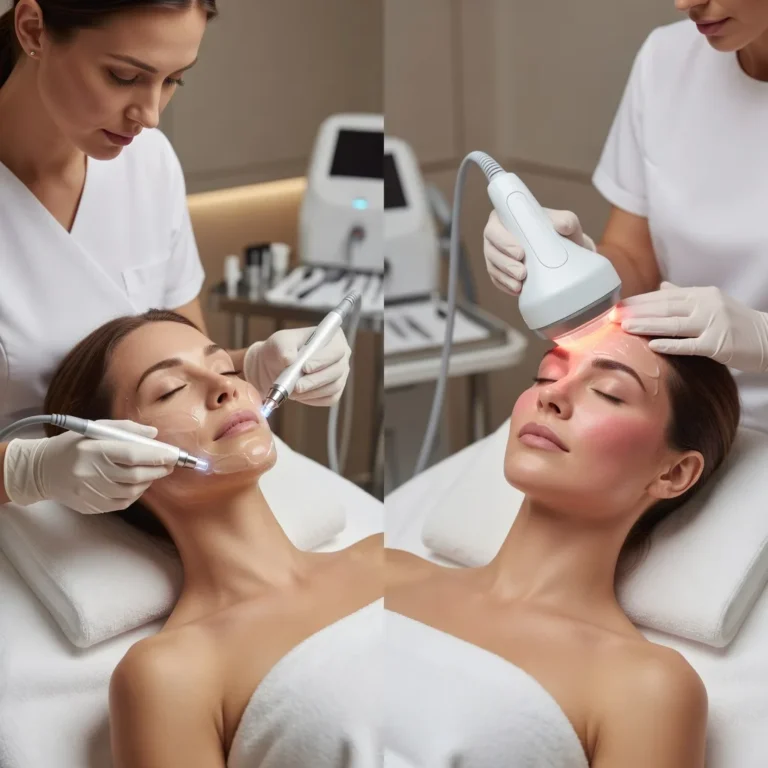
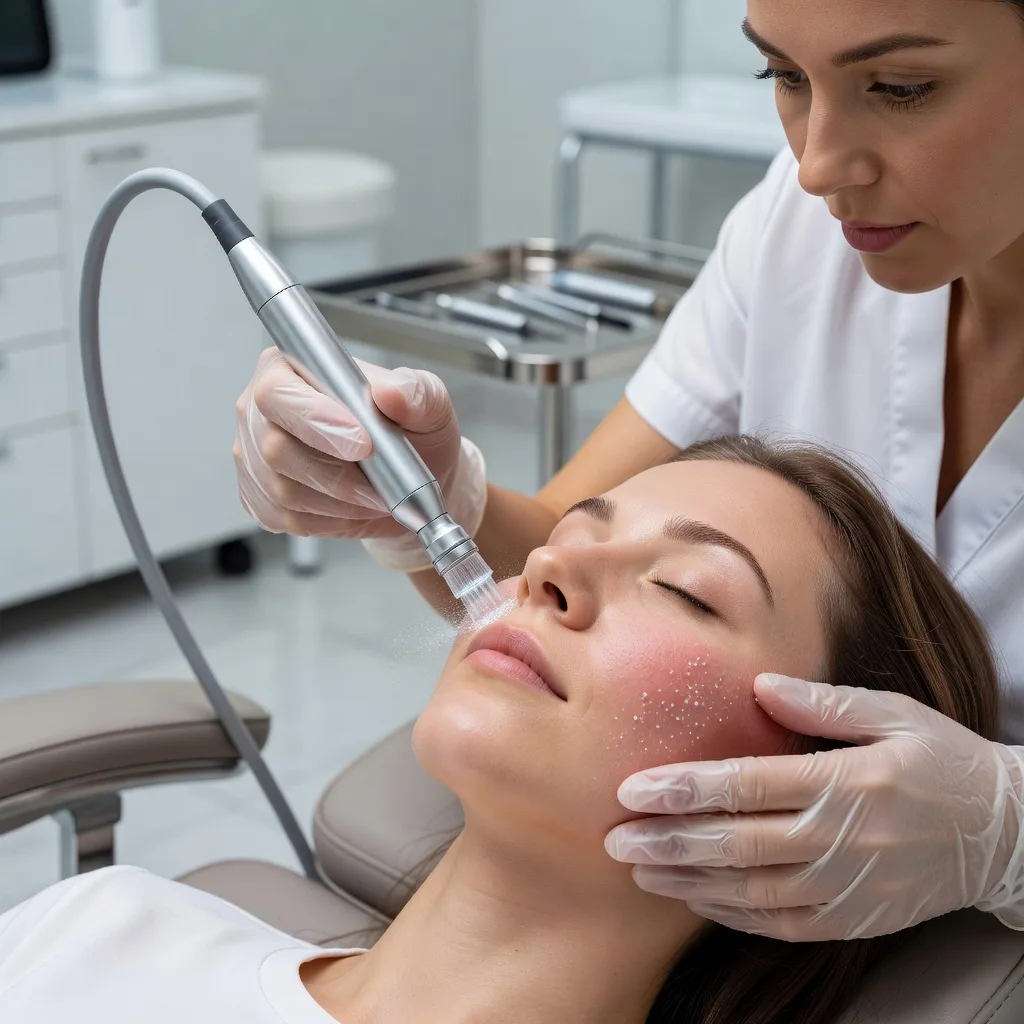
Traditional crystal microdermabrasion sprays aluminum oxide (or sometimes sodium bicarbonate or sodium chloride) crystals at the skin under vacuum, then vacuums the crystals away along with exfoliated debris. Diamond-tip systems use a wand embedded with actual diamond or diamond-like abrasive particles dragged across the skin under vacuum, with no loose crystals involved — generally considered more controllable and favored for treating close to the eyes. Hydrodermabrasion, the newest category (HydraFacial-style systems), combines vacuum-based mechanical exfoliation with simultaneous infusion of a liquid solution, sometimes including mild exfoliating acids, and is marketed as gentler and more hydrating, suited to more sensitive or reactive skin types.
| System | Exfoliation method | Loose particles? | Best suited for |
|---|---|---|---|
| Crystal | Sprayed aluminum oxide/salt crystals | Yes | General use, budget-friendly |
| Diamond-tip | Abrasive wand tip, no spray | No | Near-eye areas, more control |
| Hydrodermabrasion | Vacuum + liquid infusion | No | Sensitive/reactive skin |
What the Comparative Evidence Actually Shows
A peer-reviewed reference source confirms mechanistically that microdermabrasion — regardless of delivery system — removes the stratum corneum, triggers a genuine wound-healing cascade, and is associated with increased collagen fiber density at the dermal-epidermal junction. What it does not do is differentiate outcomes by crystal versus diamond versus hydro system specifically. Head-to-head comparative-efficacy trials between the three delivery methods aren’t well established in the literature; most comparative claims about which system is “better” trace back to industry and clinic marketing rather than controlled trials.
At-Home vs. Professional: The Real Evidence Gap
At-home devices like PMD Personal Microderm use lower vacuum suction and finer, gentler abrasive discs specifically because full professional-strength suction and abrasion in untrained hands risks bruising (petechiae) or excessive exfoliation. This is a real, legitimate engineering choice — but it also means there’s no peer-reviewed clinical trial directly comparing at-home device efficacy to professional in-office outcomes. What exists online comparing the two is consumer-review-based content, not clinical-trial evidence — a genuine gap worth stating plainly rather than assuming equivalence.
FDA Classification: Powered vs. Manual
Powered at-home dermabrasion devices fall under FDA product code GFE (“Brush, Dermabrasion, Powered”), Class I, with 510(k) premarket clearance actually required under 21 CFR 878.4820. Purely manual dermabrasion brushes, by contrast, fall under product code GED, also Class I but 510(k)-exempt under 21 CFR 878.4800. It’s a clean regulatory-tier distinction: the powered version required a premarket clearance step the manual version didn’t.
| Device type | FDA product code | Regulation | 510(k) required? |
|---|---|---|---|
| Powered dermabrasion device | GFE | 21 CFR 878.4820 | Yes |
| Manual dermabrasion brush | GED | 21 CFR 878.4800 | No (exempt) |
What It Actually Costs
Consumer cost-aggregator sources consistently place professional in-office microdermabrasion around $75 to $200 per session in the US, often sold in packages of six or more sessions for cumulative results, with variation by geography and which system (crystal, diamond, or hydro) is used. At-home devices are typically a one-time cost in the $100 to $250 range for the device itself. These are market-range figures from cost-aggregator sources, not peer-reviewed data, and should be treated as a general planning estimate rather than a guarantee.
What a Professional Session Looks Like
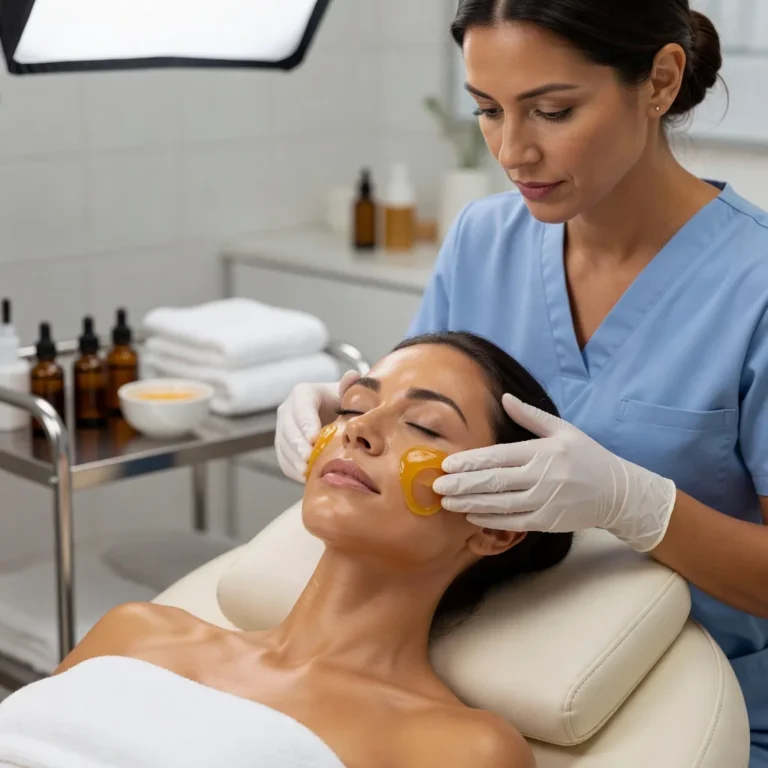
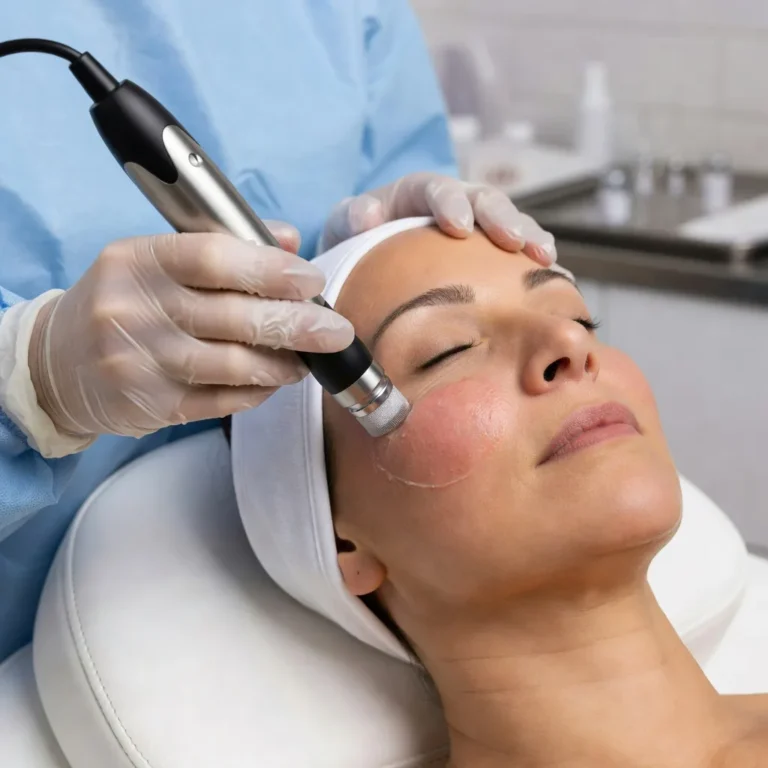
A typical in-office session runs 30 to 60 minutes: cleansing, the chosen exfoliation pass (crystal spray, diamond-tip, or hydro infusion) across the face in a systematic pattern, sometimes followed by a calming mask, and finished with moisturizer and broad-spectrum SPF.
Step by Step: Choosing a System
Identify your priority
Budget favors crystal, precision near the eyes favors diamond-tip, sensitivity favors hydrodermabrasion.Check for known allergies
A known aluminum allergy rules out crystal systems specifically — ask for diamond-tip or hydro instead.Confirm your skin condition is appropriate
Rosacea, active infections, and certain other conditions are reasons to skip mechanical exfoliation of any kind (see the contraindications section below).Ask about the provider’s specific device
Confirm whether it’s FDA-cleared, and if it’s a powered device, whether it holds 510(k) clearance.
Who’s a Good Candidate
People with normal to oily, non-sensitive skin who want a mild texture and tone improvement, and who don’t have active infections, rosacea, or a keloid-scarring history, are the most reasonable candidates for any of the three systems.
Do
- Disclose any known aluminum allergy before choosing a crystal system
- Confirm your provider’s device is FDA-appropriate for its category
- Ask about realistic session counts for your specific goal
Don’t
- Book a session with active rosacea flare-ups or active viral skin infections
- Assume at-home devices deliver professional-equivalent results — there’s no trial confirming that
- Use a crystal-spray system if you have a known aluminum sensitivity
Who It’s Genuinely Not Recommended For
Absolute contraindications include active cutaneous infections such as herpes simplex virus and varicella-zoster virus, and impetigo — mechanical abrasion can spread or inoculate these infections across the treatment area. Relative contraindications and cautions include rosacea and telangiectasias, since vascular fragility means mechanical abrasion can worsen redness and visible vessels; a history of keloid scarring; and a known aluminum allergy specifically for crystal (aluminum-oxide) systems, where hydrodermabrasion or diamond-tip would be the appropriate alternative. Active inflammatory or pustular acne is also broadly cautioned against, since mechanical abrasion over active pustules or cysts risks spreading bacteria and causing pinpoint bleeding or scarring.
When to See a Dermatologist Instead
See a board-certified dermatologist rather than booking microdermabrasion if you have active rosacea that isn’t well-controlled, a suspected active viral skin infection, a history of keloid scarring, or any lesion or mole you’re concerned about. This is a cosmetic exfoliation treatment, not a substitute for medical evaluation of an active skin condition.
A One-Minute Check Before You Book
Ask yourself: do I have active rosacea, a cold sore, or any other active skin infection right now? Do I have a known aluminum allergy? Do I have a personal history of keloid scarring? Am I currently dealing with active, inflamed acne? A “yes” to any of these is a real reason to reschedule or choose a different system (or skip mechanical exfoliation entirely), not a minor detail.
Where the Evidence Runs Out
Be clear-eyed: there’s no controlled trial establishing that one delivery system (crystal, diamond, or hydro) outperforms the others clinically, and there’s no trial comparing at-home devices to professional treatment outcomes at all. Cost, comfort, and specific allergy/sensitivity considerations are more defensible reasons to choose between systems than any claimed superiority backed by controlled research.
Combination Devices vs. Standalone Microdermabrasion
Some modern devices (DiamondGlow being a well-known example, covered in our DiamondGlow vs. HydraFacial comparison) combine diamond-tip exfoliation with simultaneous serum infusion in a single pass, positioning themselves as a step beyond standalone crystal or diamond-tip systems. Whether that combination approach genuinely outperforms a standard microdermabrasion session followed by a separately-applied serum hasn’t been established by independent controlled trials — most of the evidence supporting these combination devices comes from manufacturer-reported figures rather than independent peer-reviewed comparison, a distinction worth keeping visible when a combination device is priced at a premium over standalone options.
Why Sessions Are Spaced Around the Skin’s Turnover Cycle
The reason providers typically space microdermabrasion sessions two to four weeks apart, rather than back-to-back, ties directly to the skin’s natural cell-turnover cycle, generally cited in dermatology sources as roughly 28 to 40 days depending on age and skin condition. Treating again before the skin has had time to complete a reasonable portion of that cycle doesn’t meaningfully accelerate results and increases the risk of over-exfoliation, which is why “more frequent” isn’t the same as “more effective” for this category of treatment.
Frequently Asked Questions
Which is better, crystal or diamond-tip microdermabrasion?
No head-to-head trial establishes one as clinically superior; the choice is more reasonably based on comfort, precision near the eyes, and allergy considerations.
Is hydrodermabrasion gentler than crystal or diamond systems?
It’s marketed that way and is generally suited to more sensitive skin, though no controlled trial directly compares irritation rates across all three systems.
Do at-home microdermabrasion devices work as well as professional treatments?
There’s no peer-reviewed trial comparing the two directly — at-home devices use gentler settings specifically for safety in untrained hands, which plausibly means less intense results, but this hasn’t been formally tested.
Can I get microdermabrasion if I have rosacea?
It’s generally cautioned against, since mechanical abrasion can worsen redness and visible vessels associated with rosacea.
How much does microdermabrasion cost?
Professional sessions typically run $75-200 each, often sold in packages; at-home devices are a one-time cost around $100-250.
Is microdermabrasion safe if I’m allergic to aluminum?
Crystal systems using aluminum oxide should be avoided; diamond-tip or hydrodermabrasion are reasonable alternatives.
Can microdermabrasion spread a cold sore?
Yes — active herpes simplex infections are an absolute contraindication, since mechanical abrasion can spread the virus across the treatment area.
How many sessions does it take to see results?
Most providers recommend a series of sessions spaced two to four weeks apart for cumulative improvement, rather than a single treatment.
Are powered at-home devices FDA regulated?
Yes — they require FDA 510(k) clearance under product code GFE, unlike simple manual brushes, which are exempt.
Is microdermabrasion safe for active acne?
Inflammatory or pustular acne is a reason to postpone treatment, since abrasion over active breakouts risks spreading bacteria and scarring.