Vampire Facial vs CO2 Laser: Results, Downtime, Risks and Which to Choose
Vampire facials and CO2 laser resurfacing are both popular with people who want to improve wrinkles, acne scars, uneven texture and sun damage. They are often discussed together, but they are very different procedures, with different levels of intensity, downtime, risk and evidence.
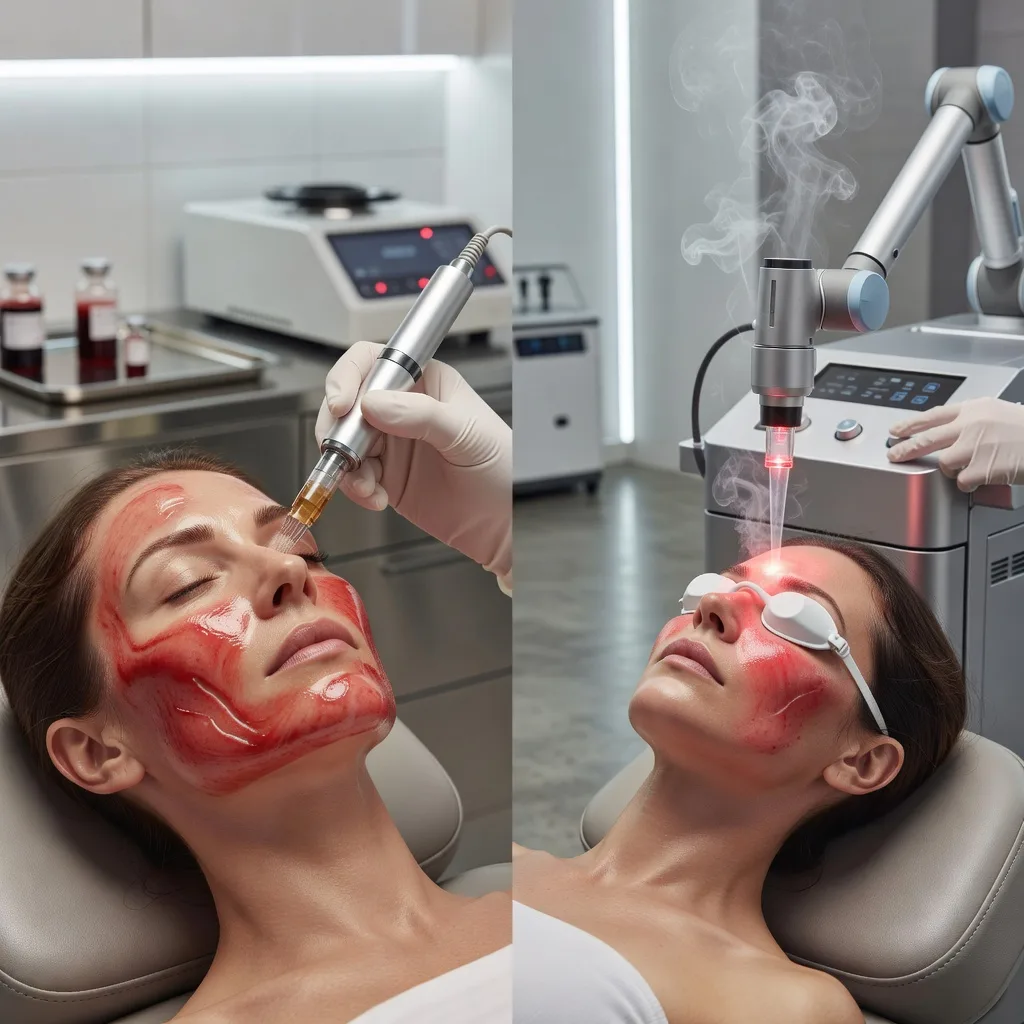
A vampire facial combines microneedling with platelet-rich plasma (PRP) made from a sample of your own blood, which is applied to or pushed into the skin in the hope that growth factors boost healing and collagen. A CO2 laser is an ablative laser that removes thin layers of skin and heats the tissue below, triggering strong collagen remodelling. CO2 laser is usually the more powerful option for deep wrinkles, sun damage and scarring, but it comes with more downtime and higher risk. A vampire facial is milder with shorter recovery, although evidence for the added benefit of PRP is still developing.
In short, a vampire facial is a moderate treatment with a few days of redness, while a CO2 laser is an intensive procedure that can mean one to two weeks of recovery but more dramatic change.
A systematic review in Plastic and Reconstructive Surgery found that 11 of 12 studies on PRP for facial rejuvenation reported improvement, but called for more high-quality trials. A review in Seminars in Plastic Surgery notes that fractional CO2 lasers have lowered complication rates compared with older ablative lasers, although adverse effects can still occur.
This guide explains how each treatment works, what results and recovery to expect, the risks, who suits each and how to choose safely.
Recommended At-Home Microneedling Tools and Recovery Products


At a Glance
- A vampire facial is microneedling plus your own platelet-rich plasma.
- A CO2 laser is an ablative laser that resurfaces the skin.
- CO2 laser is usually more powerful for deep wrinkles and scarring.
- CO2 laser recovery is longer, often one to two weeks.
- Vampire facial downtime is usually a few days of redness.
- Evidence for PRP is promising but still limited.
- Both need a qualified provider and strict hygiene.
On This Page
- Vampire Facial vs CO2 Laser at a Glance
- How a Vampire Facial Works
- How CO2 Laser Resurfacing Works
- Results and Recovery Compared
- Risks and Safety
- How to Choose Between a Vampire Facial and a CO2 Laser
- Aftercare Essentials
- Who Each Treatment Suits
- Common Misconceptions
- Dos and Don’ts
- Honest Limits
- When to See a Doctor
- Common Questions
- Final Word
Vampire Facial vs CO2 Laser at a Glance
This comparison covers the practical differences most people care about.
| Feature | Vampire facial (PRP microneedling) | CO2 laser |
|---|---|---|
| How it works | Microneedling plus plasma from your own blood | Laser removes surface layers and heats deeper skin |
| Intensity | Moderate | High, especially fully ablative |
| Main uses | Texture, mild acne scars, fine lines, glow | Deep wrinkles, sun damage, significant scarring |
| Downtime | Redness for one to three days | Often one to two weeks of peeling and redness |
| Sessions | Usually a series of three or more | Often one, sometimes repeated |
| Pain control | Numbing cream | Numbing cream, sometimes injections or sedation |
| Pigment risk in darker skin | Lower, but possible | Higher; needs careful assessment |
Because of these differences, the two are not simply stronger and weaker versions of the same thing. A good provider will match the treatment to your concern, skin type and how much recovery time you can manage.
How a Vampire Facial Works
A vampire facial begins with a small blood draw, usually from the arm. The blood is spun in a centrifuge to separate platelet-rich plasma, which contains growth factors involved in healing. The face is then treated with microneedling, and the PRP is applied to the skin or sometimes injected.
The idea is that microneedling creates tiny channels and triggers collagen production, while the PRP may enhance healing and results. The name comes from the red appearance of the skin during treatment.
The term vampire facial is a trademarked name for a specific protocol, but many clinics use it loosely for any PRP microneedling treatment. Ask exactly what the procedure involves and who performs each step.
A systematic review published in Plastic and Reconstructive Surgery and available on PubMed found that 11 of the 12 studies identified showed improved results with PRP for facial rejuvenation, but noted that many outcome measures were subjective and that higher-quality randomised trials are needed. For more on the microneedling part of the treatment, see our guide to Rezenerate facials versus microneedling.
How CO2 Laser Resurfacing Works
A CO2 laser delivers energy that vaporises thin layers of skin and heats the tissue below. As the skin heals, it produces new collagen and a fresh surface, which can improve wrinkles, sun damage and scarring.
- Fully ablative CO2: treats the entire surface; the strongest results and the longest recovery.
- Fractional CO2: treats tiny columns of skin while leaving surrounding skin intact, which speeds healing.
- Settings: depth and density are adjusted to your skin and goals, which changes recovery time.
Fractional technology has made CO2 resurfacing safer than older fully ablative treatments. A review in Seminars in Plastic Surgery, available on PubMed, explains that fractional CO2 allows resurfacing with a lower rate of complications than non-fractionated ablative treatment, but that adverse effects can still occur even with the best technology and care.
CO2 laser is a medical procedure and should be performed by a dermatologist, plastic surgeon or appropriately trained clinician in a medical setting.
Results and Recovery Compared
Expectations differ greatly between the two treatments.
| Aspect | Vampire facial | CO2 laser |
|---|---|---|
| First few days | Redness like a sunburn, mild swelling | Oozing, crusting, swelling and marked redness |
| Back to normal activities | Often within one to three days | Often after one to two weeks |
| Pinkness | Fades quickly | Can last weeks to months |
| When results show | Gradually over several weeks | Visible as skin heals, improving for months |
| Size of improvement | Subtle to moderate | Moderate to significant |
With either treatment, collagen changes continue for months after the procedure. Photos taken in the same lighting before and after the course of treatment are the fairest way to judge results. Our comparison of laser facials versus microneedling covers other laser options that sit between these two in intensity.
Risks and Safety
Both treatments carry risks, and CO2 laser in particular should be approached with care.
- Vampire facial: redness, swelling, bruising, pinpoint bleeding and temporary sensitivity.
- Vampire facial hygiene risk: any procedure involving blood and needles must follow strict infection control.
- CO2 laser: prolonged redness, infection, cold sore flare-ups, acne or milia during healing.
- CO2 laser pigment changes: darkening or, sometimes late, lightening of the skin.
- CO2 laser scarring: uncommon but possible, especially with aggressive settings or poor aftercare.
Only have a vampire facial at a licensed medical facility that follows strict infection-control practices, including single-use needles and proper handling of blood products. Procedures involving blood performed in unlicensed settings have been linked to serious infections.
People with a history of cold sores are often given antiviral medication before CO2 laser. Those with darker skin tones, a tendency to keloids, recent isotretinoin use, active infections, bleeding disorders or pregnancy should discuss suitability carefully with a doctor before either treatment.
How to Choose Between a Vampire Facial and a CO2 Laser
Define your main concern
Deep wrinkles and heavy sun damage lean towards CO2; texture and mild scarring may suit a vampire facial.
Be honest about downtime
If you cannot take one to two weeks off, a vampire facial or gentler laser may be more practical.
Consider your skin tone
Darker skin needs careful assessment, as CO2 carries a higher pigment risk.
Check your health
Discuss bleeding disorders, cold sores, keloids and medications with a doctor.
Choose the right setting
Pick a licensed medical practice with a qualified clinician.
Ask about the plan
Clarify number of sessions, settings, aftercare and follow-up.
Commit to aftercare
Plan for gentle skincare and strict sun protection afterwards.
Ask the clinic who will perform your treatment, what their training is and how they handle complications. A good provider will happily explain the risks as well as the benefits.
If injectables are part of your wider plan, our guide on facial fillers versus Botox explains how they complement skin treatments.
Aftercare Essentials
Aftercare has a big influence on results and on the risk of complications.
- Follow your provider’s written instructions exactly; they override general advice.
- Cleanse gently with lukewarm water and a mild cleanser, patting dry.
- Keep healing skin moist with a bland ointment or moisturiser as directed.
- Avoid makeup, retinoids, acids and scrubs until your provider says it is safe.
- Do not pick crusts or peeling skin, as this raises the risk of scarring.
- Avoid sun exposure and apply broad-spectrum sunscreen daily once allowed.
Recovery after CO2 laser needs more planning. Many people take time off work, avoid social events for a week or more and rely on mineral makeup once healed. After a vampire facial, most people return to work within a few days.
Who Each Treatment Suits
A vampire facial may suit people with early signs of aging, dull skin, enlarged pores or mild acne scarring who want gradual improvement with limited downtime and are comfortable with a blood draw. It is also sometimes chosen by people who cannot take long periods off work.
CO2 laser may suit people with deeper wrinkles, significant sun damage, rough texture or more pronounced scarring who can manage a longer recovery and are good candidates after a medical assessment. It is often better suited to lighter skin tones, although experienced providers can adjust settings for other skin types with careful precautions.
The American Academy of Dermatology explains the options dermatologists use for acne scar treatment, which can help you understand where each procedure fits.
Common Misconceptions
Both treatments attract bold claims online, so it helps to know where marketing and evidence part ways.
- Misconception: the plasma does all the work in a vampire facial. Reality: microneedling itself stimulates collagen, and the extra benefit of PRP is still being studied.
- Misconception: CO2 laser is one fixed treatment. Reality: settings range from light fractional passes to deep resurfacing, with very different recovery times.
- Misconception: natural means risk-free. Reality: using your own blood does not remove the need for sterile technique and proper handling.
- Misconception: one treatment lasts forever. Reality: skin keeps aging, and sun exposure can undo gains without daily protection.
Keeping these points in mind makes it easier to judge clinic claims and to ask the right questions at a consultation. A careful provider will explain what each step adds, what realistic results look like for your skin and what happens if you are not satisfied.
Dos and Don’ts
Worth Doing
- Choose a licensed medical practice
- Share your full medical history
- Plan recovery time in advance
- Follow aftercare instructions closely
- Use sunscreen every day
Skip It
- Book a vampire facial in an unlicensed setting
- Have CO2 laser right before an important event
- Pick at crusts or peeling skin
- Use strong actives on healing skin
- Ignore signs of infection
Honest Limits
Evidence for PRP in facial rejuvenation is encouraging, but many studies are small and use subjective measures, so it is still unclear how much PRP adds beyond microneedling alone. CO2 laser has a long track record, but results depend heavily on settings, skin type and the skill of the provider.
Neither treatment lifts sagging skin like surgery or stops future aging. Both work best as part of a long-term plan that includes daily sun protection and a consistent skincare routine, and a consultation with a board-certified dermatologist or plastic surgeon is the best way to decide what is realistic for you.
When to See a Doctor
- You notice increasing pain, swelling, pus or fever after treatment.
- Blisters, crusting or redness are worsening instead of improving.
- You develop cold sores or unusual spots on treated skin.
- Dark or light patches or raised scars appear during healing.
This article is for general information and does not replace professional medical advice. Consult a board-certified dermatologist or plastic surgeon before undergoing cosmetic skin procedures.
Common Questions
What is the difference between a vampire facial and a CO2 laser?
A vampire facial is microneedling with your own plasma; a CO2 laser resurfaces skin with laser energy.
Which is better for deep wrinkles?
CO2 laser is usually more effective for deep wrinkles and sun damage.
How long is recovery after CO2 laser?
Often one to two weeks, with pinkness that can last longer.
How long is recovery after a vampire facial?
Usually one to three days of redness.
Is a vampire facial safe?
It is generally low risk at licensed clinics with strict hygiene.
Is CO2 laser safe for dark skin?
It carries a higher risk of pigment changes, so careful assessment is essential.
How many vampire facials are needed?
Often a series of three or more, weeks apart.
Does PRP really work?
Studies are promising but many are small; more research is needed.
Does CO2 laser hurt?
Numbing is used, but it can be uncomfortable; stronger pain control is sometimes needed.
Can I combine both?
Some providers combine treatments; discuss timing and safety with a doctor.
Final Word
A vampire facial combines microneedling with your own platelet-rich plasma for gradual improvement with short downtime, while a CO2 laser resurfaces the skin for stronger results with a longer recovery and more risk.
Match the treatment to your concern, skin type and recovery time, choose a licensed medical practice and protect your results with careful aftercare and daily sunscreen.