
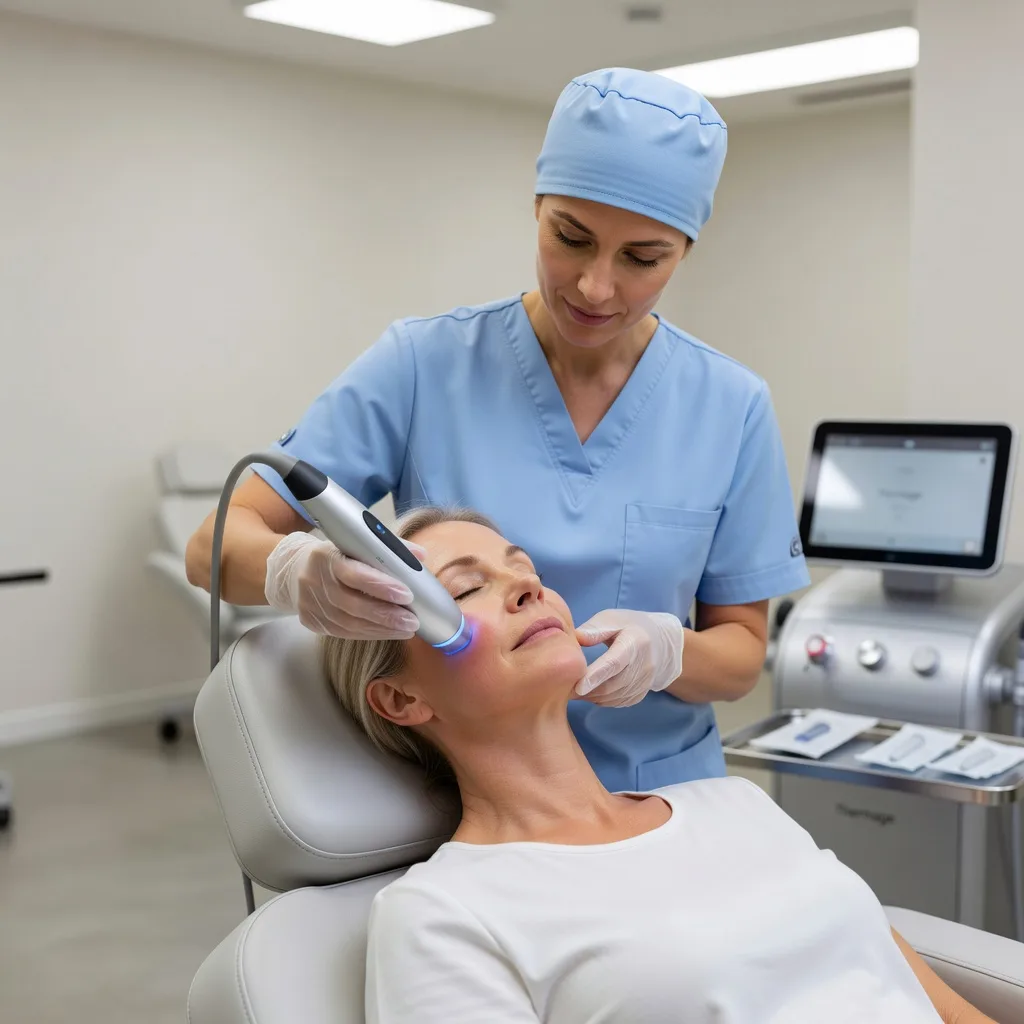
Thermage Treatment: What Actually Happens
A Thermage treatment gets marketed as a quick fix for sagging skin, and while the FDA-cleared technology behind it is real, the results work on a timeline that surprises a lot of people expecting an immediate lift.
Thermage uses monopolar radiofrequency to heat the deep dermis and fibrous septae, triggering your own body to build new collagen over the following months. That’s a fundamentally different mechanism from focused ultrasound devices, and it’s why patience matters more here than with a filler or neurotoxin.
The device itself, Thermage FLX, carries a specific FDA 510(k) clearance for periorbital wrinkles, not a blanket approval for every claim attached to radiofrequency skin tightening in general, a distinction worth understanding before you book.
This guide covers the 60-second pinch check that tells you whether your skin laxity is the kind Thermage addresses, how it compares to Sofwave and Ultherapy, what a session actually involves, and who should consider a surgical option instead.
Recommended Products for Post-Thermage Skin Care
Key Takeaways
- Thermage uses monopolar radiofrequency to heat the deep dermis and fibrous septae, which triggers new collagen production over the following months rather than delivering an instant result.
- The current device, Thermage FLX, holds FDA 510(k) clearance (K170758, 2017) specifically for treating periorbital wrinkles, alongside broader clearance for general dermatologic and electrosurgical use.
- Results build gradually over two to six months and can continue improving for up to a year, typically lasting one to two years or more.
- A simple pinch-and-release test on the jawline or under the chin gives a rough read on whether your skin laxity is the mild-to-moderate kind Thermage is designed to address.
- Thermage sits between Sofwave, which treats a shallow layer for texture, and Ultherapy, which reaches the deepest layer for a more dramatic lift.
- Anyone with a pacemaker or other implanted electrical device should not have Thermage, since the treatment relies on radiofrequency current running through the body to a grounding pad.
- Significant sagging that’s better addressed surgically won’t respond adequately to Thermage; it’s built for mild-to-moderate laxity, not a facelift replacement.
Table of Contents
- How Thermage Actually Works
- FDA Clearance and What It Covers
- The 60-Second Pinch Check Before You Book
- Thermage vs. Sofwave vs. Ultherapy
- Do This, Not That
- What a Thermage Session Involves
- Results Timeline and How Long It Lasts
- Who Should Skip Thermage
- When to See a Specialist Instead
- Frequently Asked Questions
- The Bottom Line
How Thermage Actually Works
Thermage delivers monopolar radiofrequency energy that flows from the handpiece tip, through the skin, to a grounding pad placed elsewhere on the body. That current generates volumetric heat in the deep dermis and the fibrous septae, the connective-tissue network that runs through fat, rather than heating the fat cells themselves. The heat denatures a portion of the existing collagen, which triggers a wound-healing response, and the body responds by laying down new collagen and elastin over the following months.
This is a fundamentally different approach from focused ultrasound devices like Ultherapy, which converge energy at one precise depth. Thermage instead heats a broader volume in a single pass, which is part of why it’s positioned as a general tightening and smoothing treatment rather than a targeted lift.
FDA Clearance and What It Covers
The current-generation device, Thermage FLX, received FDA 510(k) clearance (K170758) on September 22, 2017, from manufacturer Solta Medical, a Bausch Health company. It’s classified as a Class II device under 21 CFR 878.4400 and is cleared for the non-invasive treatment of periorbital wrinkles and rhytids, along with general dermatologic and electrosurgical procedures. Earlier-generation Thermage devices have carried FDA clearance since 2002.
Note: An FDA clearance for periorbital wrinkles is specific wording, not a blanket approval for every marketing claim you might see attached to radiofrequency skin tightening. If a provider or product claims something well beyond wrinkle reduction and general tightening, it’s worth asking exactly which clearance that claim is based on, the same way it’s worth checking a device’s FDA clearance before a body-contouring treatment.
The 60-Second Pinch Check Before You Book
Gently pinch the skin on your jawline or under your chin, hold for a second, then release:
- Skin springs back quickly with only mild fullness: you’re likely in the mild-to-moderate laxity range Thermage is built for.
- Skin stays visibly folded, tents, or takes several seconds to settle, with real hanging tissue: that’s a level of sagging more consistent with what a surgical facelift addresses, and Thermage alone is unlikely to deliver the result you’re picturing.
This is a rough self-check, not a clinical grading system, but it’s a genuinely useful gut-check before you spend on a consultation.
Thermage vs. Sofwave vs. Ultherapy
| Thermage | Sofwave | Ultherapy | |
|---|---|---|---|
| Energy type | Monopolar radiofrequency | Planar (broad) ultrasound | Focused ultrasound |
| Depth treated | Deep dermis + fibrous septae | Shallow, roughly 1.5mm | SMAS layer (deepest) |
| Best for | Overall tightening, smoothing | Texture, fine lines | Dramatic lift, sagging |
| Typical sessions | Often one | Often one | Often one |
| Factor | Good Thermage candidate | Poor Thermage candidate |
|---|---|---|
| Skin laxity | Mild to moderate | Significant sagging, needs surgical correction |
| Medical devices | None implanted | Pacemaker or other implanted electrical device |
| Pregnancy | Not pregnant | Currently pregnant |
| Metal near treatment site | None | Metal implants near the area |
Do This, Not That
Do
- Run the pinch check on the area you’re considering before booking a consultation
- Ask specifically which FDA clearance applies to your intended treatment area
- Expect gradual improvement over months, not an immediate result
- Disclose any implanted electrical device before treatment
- Consider a surgical consult if pinch results show real hanging tissue
Don’t
- Expect Thermage to replace a facelift for significant sagging
- Book Thermage if you have a pacemaker or similar device
- Assume one session is equivalent across all RF and ultrasound devices
- Ignore ongoing pain during treatment, tell your provider immediately
- Expect the same treatment depth as Ultherapy or the same texture focus as Sofwave
What a Thermage Session Involves
Consultation and mapping
The provider examines your skin, discusses goals, and marks the treatment area with a grid.
Cleansing
The skin is cleaned and any makeup or oil removed so the handpiece makes proper contact.
Grounding pad placement
A grounding pad is placed elsewhere on the body to complete the radiofrequency circuit safely.
RF passes with cooling
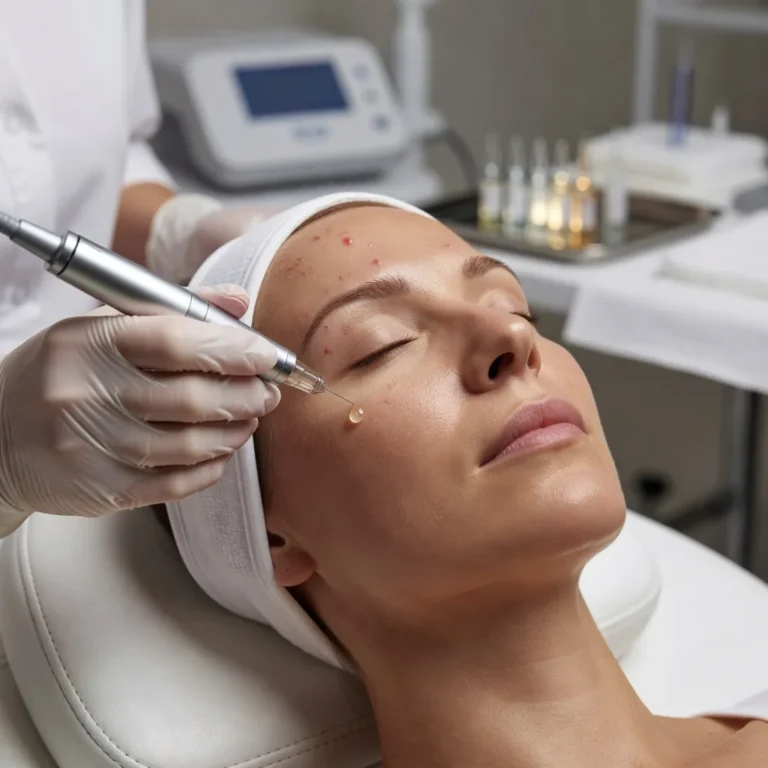
The handpiece delivers RF pulses in a grid pattern, with integrated contact cooling protecting the epidermis at each pulse.
Tip: Newer Thermage FLX handpieces add a vibration feature designed to reduce the sensation of each pulse, so ask whether your provider’s device includes it if comfort is a concern.
Comfort management
Sensations range from mild warmth to a brief hot-pinch feeling; some providers offer topical numbing, though many patients tolerate the treatment without it.
Aftercare instructions
Most people resume normal activities immediately, with instructions to use sun protection while new collagen forms over the following months.
Results Timeline and How Long It Lasts
Because Thermage works by triggering new collagen synthesis rather than immediately reshaping tissue, visible improvement typically builds over two to six months after a single session, with some people seeing continued refinement for up to a year. Results generally last one to two years or longer, depending on age, skin quality, and ongoing collagen production, similar to how skin elasticity assessed with a simple pinch test tends to decline gradually with age rather than all at once.
Who Should Skip Thermage
Thermage isn’t the right tool for everyone. People with significant sagging are generally better served by a surgical facelift, since non-invasive heating can’t remove excess skin the way surgery can. Anyone with a pacemaker or other implanted electrical device should avoid Thermage entirely, because the treatment depends on radiofrequency current traveling through the body to a grounding pad. Pregnancy and metal implants near the treatment site are additional reasons a provider may recommend waiting or choosing a different approach.
Warning: Never have Thermage performed if you have a pacemaker, implanted defibrillator, or other implanted electrical device without your cardiologist’s explicit sign-off, and ideally avoid it altogether given the grounding-pad current path.
When to See a Specialist Instead
If your own pinch check shows real hanging or draping skin rather than mild fullness, that’s a signal worth bringing to a board-certified dermatologist or facial plastic surgeon rather than booking a non-invasive device session on your own. A proper consultation can confirm whether Thermage, a different energy-based device, or a surgical approach actually matches what you’re seeing.
Frequently Asked Questions
What is Thermage and how does it work?
Thermage is a monopolar radiofrequency treatment that heats the deep dermis and fibrous septae to trigger new collagen production, tightening and smoothing skin gradually over months.
Is Thermage FDA-cleared?
Yes. The current Thermage FLX device holds FDA 510(k) clearance (K170758, 2017) for periorbital wrinkles, plus general dermatologic and electrosurgical use.
How long do Thermage results last?
Results typically last one to two years or more, depending on age and skin quality, since the treatment relies on your own ongoing collagen production.
When will I see results after Thermage?
Improvement builds gradually over two to six months, with some continued refinement possible for up to a year after a single session.
Who should not get Thermage?
People with a pacemaker or other implanted electrical device, those who are pregnant, and those with significant sagging better suited to surgery should avoid or skip Thermage.
How is Thermage different from Ultherapy?
Ultherapy uses focused ultrasound to reach the deepest SMAS layer for a more dramatic lift, while Thermage uses radiofrequency to heat a broader, shallower volume for general tightening.
How is Thermage different from Sofwave?
Sofwave uses planar ultrasound to treat a shallow layer, around 1.5mm deep, mainly for texture and fine lines, while Thermage treats deeper tissue for overall tightening.
Does Thermage hurt?
Sensations range from mild warmth to a brief hot-pinch feeling, managed with integrated cooling; many people tolerate it without numbing cream.
Can Thermage replace a facelift?
No. Thermage addresses mild-to-moderate laxity through collagen stimulation; it can’t remove excess skin the way a surgical facelift can.
How many Thermage sessions are needed?
Many people see meaningful results from a single session, since the treatment is designed to trigger a longer collagen-building response rather than requiring a repeated series.
The Bottom Line
Thermage is a genuinely FDA-cleared, well-established radiofrequency treatment for mild-to-moderate skin laxity, not a marketing label slapped on an unproven device. Its results build slowly because they depend on your own collagen response, which is exactly why patience matters more here than with a filler or neurotoxin.
Run the pinch check honestly before you book: mild fullness that springs back is squarely in Thermage’s lane, while real hanging skin is a conversation to have with a specialist about surgical options instead.
One Comment