Seaweed Facial: What The Science Actually Shows
A seaweed facial promises detoxification, mineral nourishment, and antioxidant renewal, all from a mask made of algae. Some of that is real skincare chemistry, and some of it doesn’t survive contact with how skin actually absorbs anything.
The mask layer, usually alginate extracted from brown algae, works mainly through physical occlusion and hydration, not by feeding your skin minerals or vitamins the way marketing often implies. Fucoxanthin, a pigment unique to brown algae, does have real documented antioxidant activity, though mostly from cell and animal research rather than human trials on masks specifically.
The genuinely underappreciated detail here isn’t about what seaweed can do for your skin, it’s about iodine. Brown algae carries iodine content that’s both high and wildly inconsistent, a real consideration if you have thyroid disease, not a general population-wide warning.
This guide separates what a seaweed facial can actually deliver from what it can’t, and covers the one self-check that matters if you have a thyroid condition.
Recommended Products for Hydration and Antioxidant Skincare
Key Takeaways
- A seaweed facial’s mask layer, usually alginate extracted from brown algae, works mainly by physical occlusion and hydration, not by feeding your skin minerals or vitamins.
- Fucoxanthin, a pigment unique to brown algae, has real documented antioxidant and anti-inflammatory activity, but the evidence is mostly from cell and animal studies, not large human trials on masks.
- “Detoxifies your skin” has no defined mechanism behind it, there’s no specific toxin a face mask removes.
- Brown algae like kelp and kombu carry inconsistent and sometimes very high iodine content, a real consideration for anyone with thyroid disease.
- A published study found topical iodine can be absorbed through skin in amounts that measurably affect thyroid iodine uptake, meaning “it’s just on the surface” isn’t a safe assumption for everyone.
- Allergic contact dermatitis to algae extract is uncommon but possible, a patch test before full-face use is the real precaution.
- Seaweed extracts are regulated as cosmetic ingredients in the US, not as drugs, and carry no specific FDA warning.
Table of Contents
- What Actually Happens in a Seaweed Facial
- The Real Active Compounds: Alginate and Fucoxanthin
- What a Seaweed Mask Can’t Do
- The Iodine Question: A Real Self-Check
- Comparing Seaweed Facial Formats
- Do This, Not That
- How to Do a Seaweed Facial Safely
- Who Should Be Extra Careful
- When to See a Doctor
- Frequently Asked Questions
- The Bottom Line
What Actually Happens in a Seaweed Facial
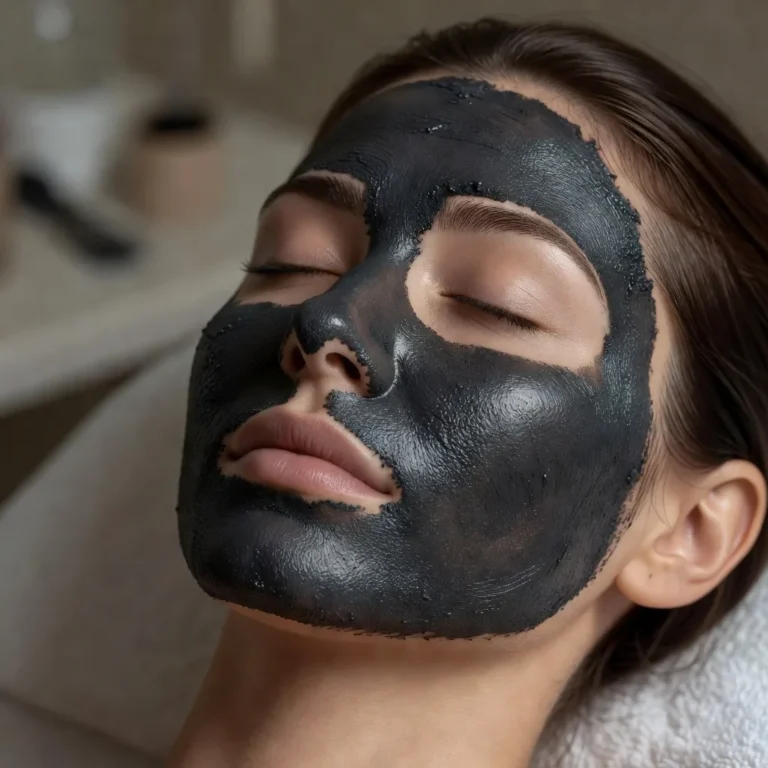
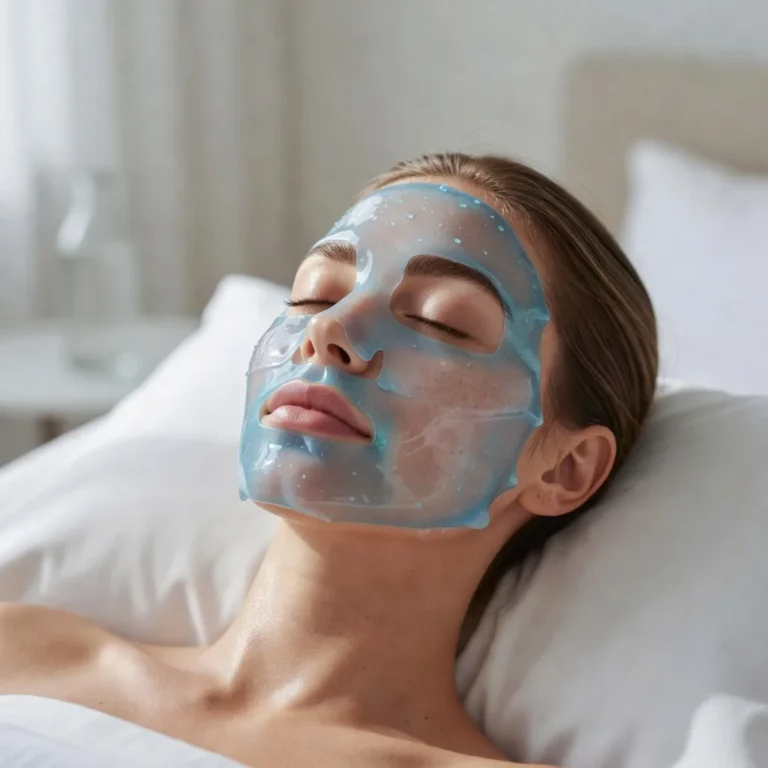
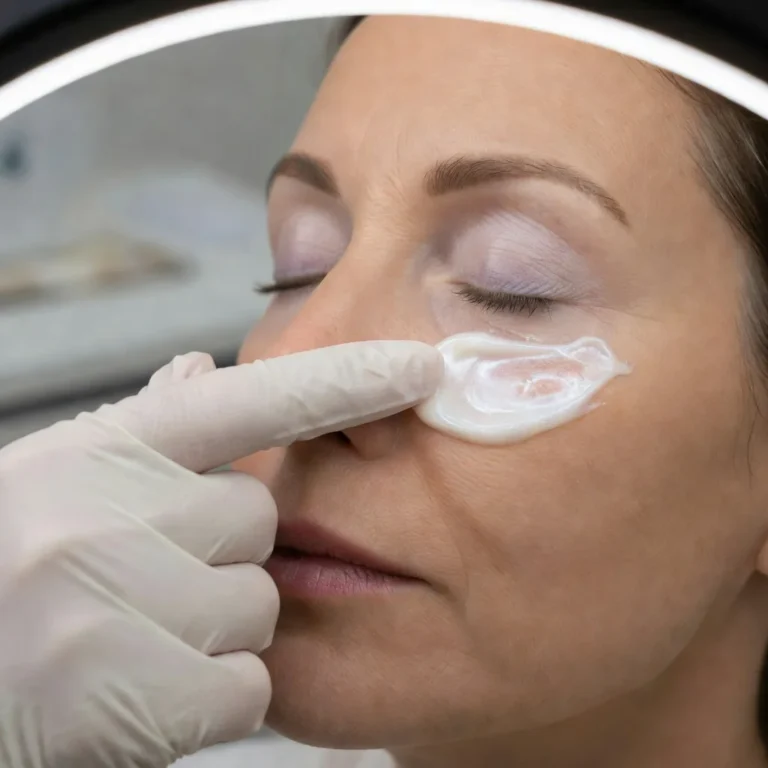
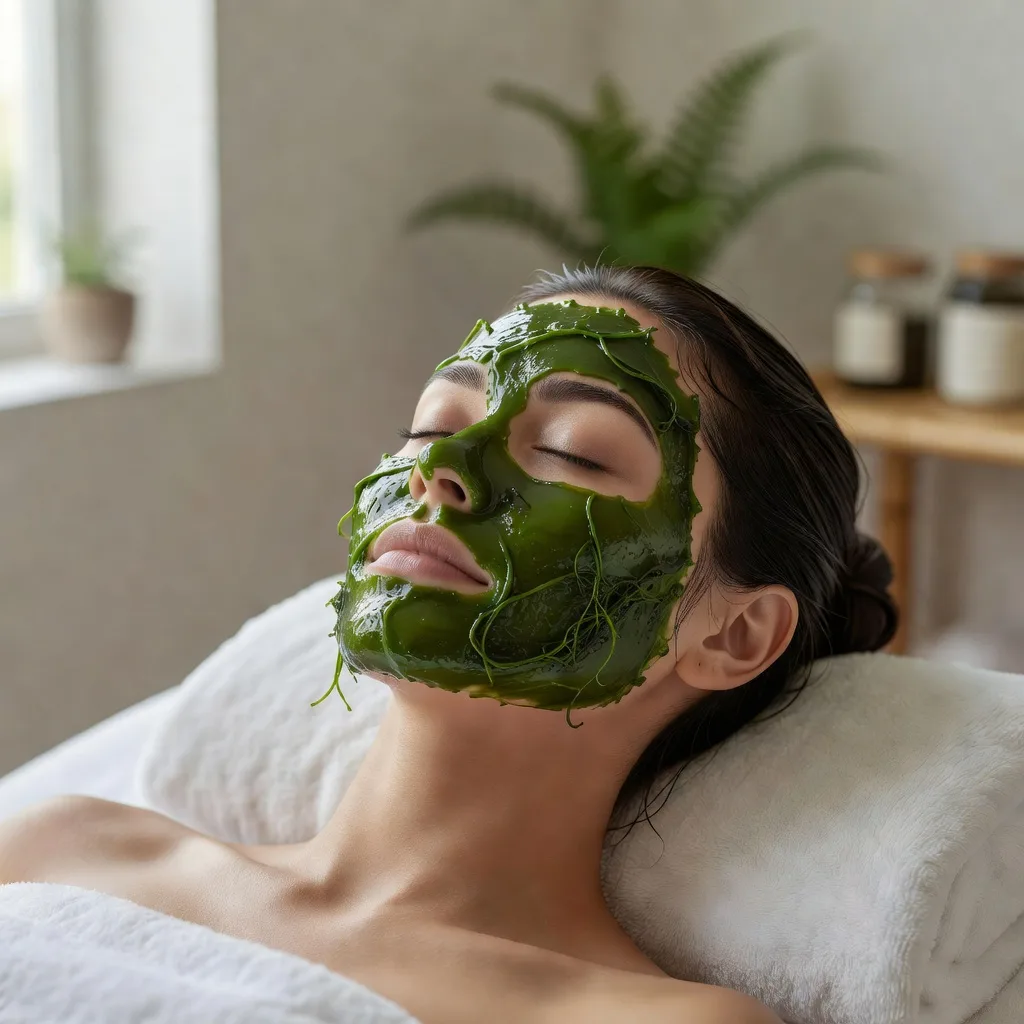
The spa version of a seaweed facial almost always uses alginate, a substance extracted from brown algae like kelp, mixed with water into a paste that’s spread thickly over the face and left to set into a semi-rigid, peelable layer over 10 to 15 minutes. Many estheticians apply a serum or vitamin ampoule underneath the alginate first, using the mask itself purely as an occlusive seal that holds those actives against the skin while it sets, rather than as the active ingredient.
The DIY version usually skips the setting-agent step entirely: powdered kelp, spirulina, or chlorella is stirred into water, honey, or clay and applied as a simple paste mask that’s rinsed off rather than peeled. Both versions share the same base ingredient category, brown or blue-green algae, but they deliver very different experiences and, as it turns out, different levels of evidence behind the claims made about them.
The Real Active Compounds: Alginate and Fucoxanthin
Alginate’s real, measurable job in a professional mask is physical: it forms a hydrogel that occludes the skin surface, temporarily boosting hydration by preventing water loss and holding whatever’s underneath it in place. A preliminary study on an alginate hydrogel-lipid nanodispersion bio-mask found short-term improvements in hydration and skin barrier markers, though the authors were careful to frame it as a small, preliminary study rather than proof of any lasting skin remodeling.
Fucoxanthin is the more interesting active compound here. It’s a carotenoid pigment found specifically in brown algae, and it has real, documented anti-inflammatory and photoprotective activity in laboratory cell and animal studies, summarized in a 2022 systematic pharmacological review. That’s a genuine, active area of cosmetic-ingredient research, not marketing fiction. The caveat that matters for a seaweed facial specifically is that this evidence base is still dominated by in vitro and animal work; independent human clinical trials testing a topical fucoxanthin-containing mask for measurable skin outcomes are still sparse.
What a Seaweed Mask Can’t Do
Two of the most common claims made about seaweed facials don’t hold up against what’s actually known about skin physiology. “Detoxifies your skin” is the first: there’s no specific toxin that builds up in skin for a face mask to remove, and no defined mechanism by which algae extract would pull one out even if it did. This is marketing language dressed up as a physiological claim, not a testable one.
“Delivers minerals and vitamins into your skin” is the second, and it runs into the same barrier problem covered elsewhere on this site: minerals like calcium, magnesium, and potassium in algae don’t meaningfully cross intact stratum corneum from a rinse-off or peel-off mask. The measurable, honest effect of a seaweed mask is short-term surface hydration and occlusion, which is a real and pleasant result, just not the same thing as “feeding” your skin cells nutrients through the surface.
Note: A related claim, that seaweed facials “nourish the thyroid,” isn’t a real skincare mechanism either. Topical iodine doesn’t functionally feed the thyroid gland the way dietary iodine intake does. That doesn’t mean topical iodine is inert, though, which is the actual, more useful thing to understand about this ingredient category.
The Iodine Question: A Real Self-Check
Here’s a genuine, underappreciated consideration that most seaweed-facial marketing skips entirely: brown algae carries iodine content that is both high and wildly inconsistent from product to product. An audit of 96 commercial seaweed products found iodine content ranging from 128 to 62,400 micrograms per serving, with 54 of the 96 products exceeding the adult tolerable upper intake level of 600 micrograms in a single serving. That study focused on ingestion, but it establishes clearly that seaweed iodine content isn’t a small, standardized quantity you can assume is negligible.
Topical iodine isn’t necessarily inert either. An older clinical study found that iodine applied to skin as a tincture was absorbed well enough to measurably block subsequent radioiodine uptake by the thyroid gland, meaning topical iodine can cross the skin barrier in physiologically meaningful amounts under some conditions. The real self-check here is simple: if you have a diagnosed thyroid condition, that’s the specific group this consideration applies to, not the general population.
Comparing Seaweed Facial Formats
| Professional alginate mask | DIY powder mask | |
|---|---|---|
| Primary function | Occlusive seal for underlying serum | Standalone paste, rinsed off |
| Setting behavior | Sets into peelable rigid layer | Stays soft, no setting agent |
| Typical duration | 10-15 minutes | 10-20 minutes |
| Iodine exposure | Depends on algae source used | Depends heavily on which powder and how much |
| Claim | What the evidence actually supports |
|---|---|
| “Detoxifies skin” | No defined mechanism or toxin identified; not supported |
| “Feeds skin minerals/vitamins” | Minerals don’t meaningfully penetrate intact skin from a mask; not supported |
| Fucoxanthin antioxidant activity | Real in cell/animal studies; limited human mask-specific trials |
| Short-term hydration/occlusion | Real, measurable, modest effect |
Do This, Not That
Do
- Patch test any new seaweed product 24 to 48 hours before full-face use
- Check labels for the specific algae species if you have a thyroid condition
- Treat a seaweed mask as a hydration/occlusion step, not a “nutrient delivery” step
- Mention frequent professional seaweed treatments to your endocrinologist if you have thyroid disease
- Use it as a pleasant, short-term hydrating step in a broader routine
Don’t
- Assume “detoxifying” claims describe a real physiological process
- Expect minerals or vitamins in the mask to meaningfully absorb into skin
- Ignore a diagnosed thyroid condition when choosing how often to use iodine-rich algae treatments
- Use a professional alginate mask on broken or actively irritated skin
- Confuse fucoxanthin’s lab-based evidence with proof of visible results from one mask
How to Do a Seaweed Facial Safely
Patch test first
Apply a small amount to your inner forearm and wait 24 to 48 hours before using it on your face.
Cleanse your face
Start with clean, dry skin so the mask can make even contact.
Apply an even layer
Whether it’s a DIY paste or a professional alginate mix, spread it evenly, avoiding the eye area and any broken skin.
Tip: If a serum is meant to go underneath, apply that first and let it absorb briefly before adding the mask layer on top.
Wait the recommended time
10 to 20 minutes is typical; alginate masks will feel firm and peelable when ready.
Remove and moisturize
Peel or rinse off, then follow with your normal moisturizer to lock in the short-term hydration boost.
Who Should Be Extra Careful
People with diagnosed thyroid disease, including Hashimoto’s thyroiditis, Graves’ disease, or thyroid nodules, are the group for whom the iodine content of brown algae is genuinely relevant, not a general population-wide warning. If you fall into this group and enjoy frequent or professional-strength seaweed treatments, it’s worth mentioning to your endocrinologist, particularly if you’re also taking thyroid medication where iodine intake timing can matter. This is a specific, defensible caution grounded in real absorption data, not blanket fear about a spa treatment.
When to See a Doctor
Warning: If you notice new or worsening thyroid symptoms, unusual swelling in your neck, or a reaction after a seaweed treatment, that’s worth a conversation with a physician rather than something to self-diagnose from a skincare routine.
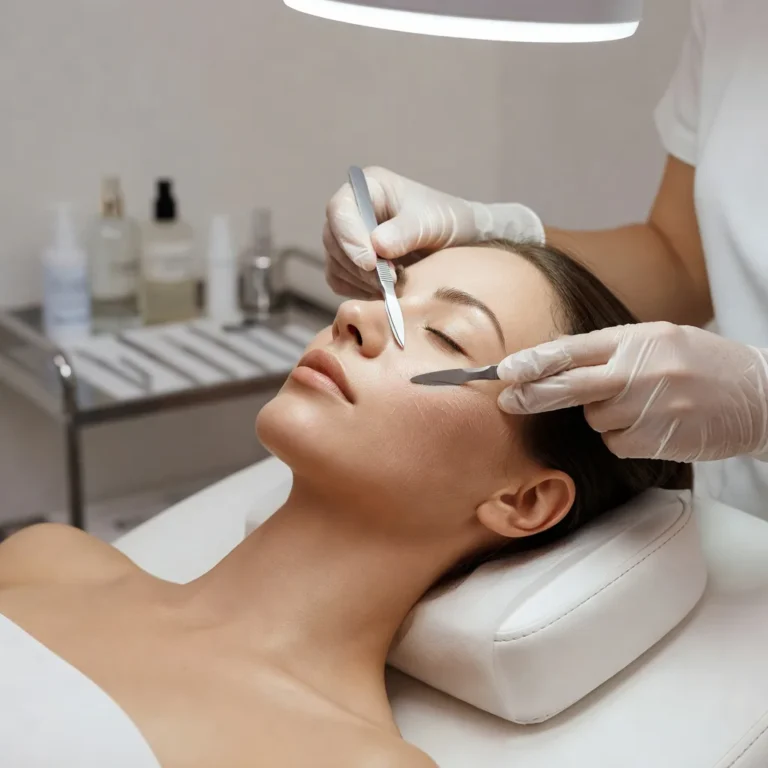
A dermatologist can also evaluate any contact dermatitis reaction to algae extract, which is uncommon but does occur, and can help you distinguish it from an unrelated skin condition. If you’re weighing a seaweed mask against a more intensive exfoliating option like a professional skin peel, a provider can help you decide which actually matches your goals rather than guessing from marketing copy.
Frequently Asked Questions
Does a seaweed facial really detoxify skin?
No, there’s no defined toxin a face mask removes and no established mechanism for this claim; it’s marketing language, not a physiological process.
What does alginate actually do in a seaweed mask?
It forms a hydrogel that occludes the skin, temporarily boosting hydration and holding any underlying serum in place, rather than delivering nutrients itself.
Is fucoxanthin in seaweed masks backed by real research?
Yes, it has documented antioxidant and anti-inflammatory activity in cell and animal studies, though human trials on topical masks specifically are still limited.
Can a seaweed facial affect my thyroid?
Brown algae contains variable, sometimes high iodine levels, and topical iodine can be absorbed through skin in meaningful amounts, which matters most for people with diagnosed thyroid conditions.
Do minerals in seaweed actually absorb into skin?
Not meaningfully; minerals like calcium, magnesium, and potassium don’t cross intact skin from a rinse-off or peel-off mask in any significant amount.
Is a seaweed facial safe for everyone?
It’s generally safe for most people when patch tested first, but those with diagnosed thyroid disease should discuss frequent use with their doctor.
How long should I leave a seaweed mask on?
Most professional and DIY versions are left on for 10 to 20 minutes before removal.
Is seaweed extract regulated by the FDA?
It’s regulated as a cosmetic ingredient, not a drug, and carries no specific FDA warning.
Can seaweed facials cause allergic reactions?
Allergic contact dermatitis to algae extract is uncommon but possible, which is why a patch test before full-face use is worthwhile.
What’s the real benefit of a seaweed facial?
Short-term surface hydration and occlusion, plus a pleasant sensory experience, rather than deep nutrient delivery or detoxification.
The Bottom Line
A seaweed facial delivers a real, if modest, short-term hydration and occlusion benefit, and fucoxanthin’s antioxidant activity is genuinely documented in lab research, even if human trials on masks specifically are still catching up. What it doesn’t do is detoxify your skin or feed it minerals and vitamins through the surface, those are marketing claims without a supporting mechanism.
The one consideration worth taking seriously is iodine content if you have diagnosed thyroid disease. For everyone else, a patch test and a realistic expectation of what the mask can deliver are all you need to enjoy it safely.