How Long Does Facial Fat Grafting Last?
How long does facial fat grafting last, and is the “permanent” marketing claim you keep hearing from providers and clinic websites actually accurate?
A pooled meta-analysis of 27 studies and over 1,000 patients found average long-term fat retention of 47 percent, with individual studies ranging from 26 to 83 percent. That’s a real, front-loaded biological process, not a sign the procedure failed.
What survives that early window generally does behave as permanent, living tissue, which is why surgeons deliberately overfill at the time of injection.
This guide walks through the real, peer-reviewed survival data, why some transferred fat genuinely doesn’t make it through the healing process, and what actually affects how much sticks around for the long term.
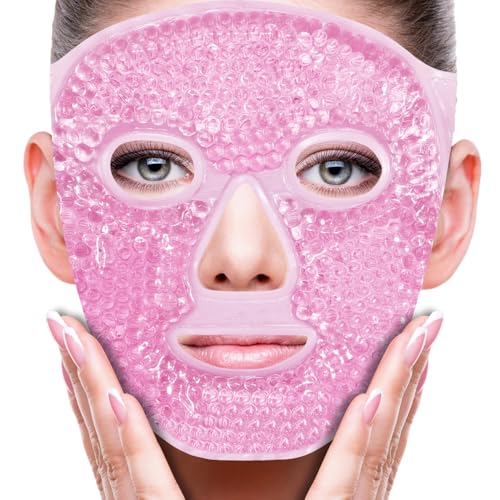
Recommended Cold Compresses for Post-Procedure Swelling




The Honest Answer: Some of It Doesn’t Last, and That’s Expected
Facial fat grafting is often marketed as a “permanent” alternative to filler, and that’s a half-truth worth correcting precisely. A real portion of the fat injected during the procedure dies off in the first few months after surgery — that’s a normal, expected part of the biology, not a sign the procedure failed. What survives that early window, however, generally does behave as permanent, living tissue.
This guide walks through the actual pooled survival data from the best available meta-analysis, the biological reason behind the early loss, what genuinely affects how much sticks around, and how to interpret the “permanent” marketing claim honestly. For a breakdown of realistic pricing given this survival data, see our companion guide to what facial fat grafting actually costs.
The Numbers That Matter
- A pooled meta-analysis of 27 studies and over 1,000 patients found average long-term fat retention of 47 percent.
- Individual studies in that same analysis ranged from 26 percent to 83 percent retention — a wide, real spread.
- Most volume loss happens in the first three to four months, driven by a lack of blood supply to the newly transferred fat.
- Fat that survives past that early window generally behaves as stable, permanent living tissue.
- Technique, processing method, and injection approach all measurably affect how much fat ultimately survives.
- Surgeons deliberately overfill at the time of injection, anticipating predictable early volume loss.
Guide Map
- The Honest Answer: Some of It Doesn’t Last, and That’s Expected
- The Real Numbers: A 27-Study Meta-Analysis
- Why Some Fat Dies: The Biology of Graft Survival
- What Actually Affects How Much Sticks Around
- Fat Grafting vs. Filler: Longevity Compared
- What to Expect Timeline-Wise After the Procedure
- Who Tends to Get the Best Long-Term Retention
- What Can Shorten How Long Results Last
- When to Talk to Your Surgeon About Results
- No Home Test for This — What to Track Instead
- Where the Evidence Runs Out
- Frequently Asked Questions
The Real Numbers: A 27-Study Meta-Analysis
The most rigorous available data comes from a systematic review and meta-analysis published in Aesthetic Plastic Surgery in 2021, pooling 27 studies covering 1,011 patients, with follow-up ranging from three to twenty-four months. The pooled overall retention rate was 47 percent, with a 95 percent confidence interval of 41 to 53 percent. Individual studies within that pool ranged far more widely, from 26 percent to 83 percent retention. The complication rate across the pooled cohort was a reassuringly low 2.8 percent. The review’s own authors concluded that the exact percentage of facial fat retained is currently unpredictable, and that reported rates vary significantly depending on how each study actually measured volume.
Why Some Fat Dies: The Biology of Graft Survival
Transferred fat cells don’t arrive with their own blood supply. In the first days to weeks after transfer, they survive purely on passive diffusion of oxygen and nutrients from the surrounding tissue, until the body can grow new blood vessels into the graft, a process called neovascularization. Fat cells positioned too far from a blood supply during that window run out of oxygen and die, a process called ischemic necrosis, and the body resorbs that dead tissue over the following weeks to months. This is a front-loaded process — most of the volume that’s going to be lost is lost within the first three to four months, not gradually over years. Whatever fat successfully becomes revascularized during that window is then incorporated as genuinely living tissue, with a normal fat-cell lifespan, behaving essentially like the rest of the body’s fat from that point forward.
What Actually Affects How Much Sticks Around
Several real, technique-dependent factors influence final retention. Harvesting method matters: gentler, low-pressure liposuction is generally associated with better fat-cell viability than more traumatic, high-pressure extraction. Processing method — centrifugation, filtration, or simple sedimentation to separate viable fat from blood and fluid before injection — has been shown in comparative studies to produce different retention outcomes. Injection technique matters too: multiple small-aliquot passes that maximize the fat’s contact with surrounding vascularized tissue tend to outperform large single boluses, which carry a higher risk of central necrosis in the middle of the injected volume, away from any blood supply. Patient factors play a role as well — smoking measurably impairs the neovascularization process, and the meta-analysis found a trend toward better retention in secondary or repeat grafting procedures, plausibly because the recipient area is already partially revascularized from the first round.
The recipient site itself matters too. Areas with naturally richer blood supply and looser surrounding tissue, like the cheeks and temples, are generally considered more favorable grafting sites than areas with tighter, more fibrous tissue and a less generous native blood supply, like some areas around the lips or under the eyes. This is part of why results can look genuinely different between two areas of the same patient’s face treated in the same session, even with identical harvesting and processing technique — the recipient tissue’s own biology is doing real work here too, not just the surgeon’s technique.
| Factor | Effect on retention |
|---|---|
| Gentle, low-pressure harvesting | Generally better fat-cell viability |
| Multiple small-aliquot injections | Better vascularized-tissue contact, less central necrosis |
| Smoking | Impairs neovascularization, reduces retention |
| Secondary/repeat procedure | Trend toward improved retention |
Fat Grafting vs. Filler: Longevity Compared
| Dermal filler | Facial fat grafting | |
|---|---|---|
| Breakdown mechanism | Steady enzymatic breakdown (hyaluronidase, for HA fillers) | Front-loaded loss in first 3-4 months, then stable |
| Typical duration | 6-24 months, then repeat treatment needed | Surviving portion (about 47% on average) generally long-term |
| Predictability | Fairly predictable degradation timeline | Currently unpredictable exact retention percentage per patient |
What to Expect Timeline-Wise After the Procedure
First 1-2 weeks
Significant swelling that can temporarily make results look more dramatic than the eventual outcome.Weeks 2-6
Swelling resolves and some early volume loss becomes visible as the graft settles.Months 3-4
Most of the ischemia-related fat loss has occurred by this point; remaining volume is a better predictor of final results.Months 6+
Surviving fat is now stably incorporated as living tissue, generally representing your long-term result.Beyond one year
Results are typically stable barring significant weight change, though a touch-up session is sometimes planned from the start.
Who Tends to Get the Best Long-Term Retention
Non-smokers, patients undergoing the procedure with a surgeon using gentle harvesting and multiple small-aliquot injection technique, and patients receiving a secondary or repeat grafting procedure all trend toward better retention in the available research. Realistic expectations matter too — understanding upfront that some early loss is normal makes the process easier to evaluate honestly.
What Can Shorten How Long Results Last
Significant weight loss after the procedure can shrink surviving grafted fat, since it behaves like the rest of your body fat. Smoking impairs the revascularization process that determines how much fat survives in the first place. Aggressive, high-pressure harvesting or large-bolus injection technique are also associated with worse retention in comparative studies.
When to Talk to Your Surgeon About Results
If your results seem to have dropped off dramatically beyond what would be expected from the typical three-to-four-month resorption window, or if volume loss continues well past six months, it’s worth a follow-up conversation with your surgeon rather than assuming that’s simply expected.
No Home Test for This — What to Track Instead
There’s no at-home way to measure your own fat-graft retention percentage; that requires imaging methods like three-dimensional surface scanning used in research settings, not a tool available to patients. The practical substitute surgeons and patients actually use is standardized photography: consistent lighting, angle, and distance at set intervals (before surgery, at two weeks, at three to four months, and at one year), which at least lets you and your surgeon track the trajectory of your own results honestly rather than relying on memory or a single before-and-after comparison taken under inconsistent conditions.
Do
- Take standardized before-and-after photos at consistent intervals
- Ask your surgeon about their specific harvesting and injection technique
- Expect and plan for some early volume loss in the first few months
Don’t
- Judge final results from the first two weeks, when swelling inflates the apparent volume
- Assume “permanent” means zero volume loss will occur
- Skip discussing smoking or significant planned weight changes with your surgeon beforehand
Where the Evidence Runs Out
The meta-analysis’s own authors state plainly that the exact retention percentage for an individual patient is currently unpredictable, given how much reported rates vary by measurement method across different studies. No single study has isolated exactly how much each individual technique factor (harvesting pressure, processing method, injection pattern) independently contributes to final retention in one head-to-head comparison. Patients considering this procedure should treat any specific promised percentage from a provider with appropriate skepticism, since the underlying research itself hasn’t settled on one, and should ask instead about that provider’s own technique and typical touch-up approach.
Frequently Asked Questions
How long does facial fat grafting last?
A pooled meta-analysis found average long-term retention of 47 percent, with results that survive the first few months generally considered stable and long-term.
Is facial fat grafting really permanent?
Partially — roughly half the injected fat is typically lost in the first few months, but whatever survives past that point generally behaves as permanent tissue.
Why does some transferred fat die off?
Newly transferred fat has no blood supply at first and survives on diffusion alone until new blood vessels grow in; cells too far from a blood supply die and are resorbed.
When does most fat-graft volume loss happen?
Most of it occurs within the first three to four months after the procedure.
Does smoking affect fat grafting results?
Yes — smoking impairs the blood-vessel growth that determines how much transferred fat ultimately survives.
Can weight loss affect fat grafting results?
Yes, since surviving grafted fat behaves like your body’s other fat and can shrink with significant weight loss.
Does technique affect how long results last?
Yes — gentler harvesting and multiple small injections generally outperform aggressive harvesting and large boluses.
Why do surgeons overfill during fat grafting?
To account for the predictable early volume loss, so the remaining fat matches the intended final result.
Is fat grafting more durable than filler?
The surviving portion generally lasts longer than typical filler, which degrades on a more predictable 6-24 month timeline.
Can you predict exactly how much fat will survive?
No — the best available meta-analysis states the exact retention percentage is currently unpredictable for an individual patient.