How to Get Makeup Off Without Makeup Remover
Wondering how to get makeup off without makeup remover? A cleansing balm or oil, micellar water, or a properly done double cleanse with a plain gentle cleanser all work, each through a real, understandable mechanism.
Micellar water’s surfactant molecules form micelles that trap oil-based makeup and lift it away, while a dry-skin double cleanse works on the same oil-dissolves-oil principle used by any purpose-built remover. Not every online suggestion holds up equally well once you look at what it’s actually formulated for.
Comedogenicity ratings for common oil substitutes come from decades-old data, a real, acknowledged gap worth understanding, and one popular suggestion, mayonnaise, genuinely doesn’t belong on this list at all.
This guide ranks the real alternatives from most to least reasonable, and covers the gentler approach waterproof and eye-area makeup actually needs.
Recommended Products for Gentle Makeup Removal
Key Takeaways
- You can get makeup off without makeup remover using a cleansing balm, oil, micellar water, or a properly done double cleanse.
- Micellar water works through a real mechanism, surfactant micelles that trap oil-based makeup and lift away without rinsing.
- A dry-skin double cleanse, oil-based cleanser first, water-based second, is a legitimate no-special-product alternative.
- Comedogenicity ratings for oils come from decades-old rabbit-skin assays, a real, acknowledged scientific gap worth knowing about.
- Mayonnaise and similar condiments are not dermatologically reasonable substitutes, they add contamination and allergen risk without any real advantage.
- Waterproof and eye-area makeup needs a gentler, longer-dwell-time approach than tugging or scrubbing.
Table of Contents
- Getting Makeup Off Without Makeup Remover
- How Micellar Water Actually Works
- Ranked Alternatives, Best to Worst
- Comparing Oils by Comedogenicity
- Why Mayonnaise Isn’t a Real Answer
- Waterproof and Eye-Area Makeup
- Long-Wear and Full-Coverage Formulas
- Do This, Not That
- How to Double-Cleanse Without Remover
- A Practical Note for Travel or Emergencies
- When to See a Dermatologist
- Frequently Asked Questions
- The Bottom Line
Getting Makeup Off Without Makeup Remover
You genuinely can remove makeup without a dedicated makeup remover, using a cleansing balm or oil, micellar water, or a properly done double cleanse with a plain gentle cleanser. What matters is understanding why these work, because that’s what separates a dermatologically reasonable substitute from an internet trend that just happens to also remove makeup while adding risk.
This guide ranks the real alternatives from most to least reasonable, explains the comedogenicity data behind common oil substitutes, and addresses one popular suggestion, mayonnaise, that genuinely doesn’t hold up once you look at what it’s actually formulated for.
How Micellar Water Actually Works
Micellar water isn’t just scented water, it contains surfactant molecules that self-assemble into structures called micelles once their concentration crosses a certain threshold. Each micelle has a hydrophobic core that traps oil and pigment from makeup, and a hydrophilic exterior that lets the whole structure lift away from skin using a cotton pad and water, without necessarily needing a rinse step afterward.
Individual tolerance varies here. If your skin feels tight or dry after using micellar water, rinsing afterward is a reasonable adjustment, even though the product is designed to work without it. This is a genuinely formulated, purpose-built product, not a workaround, so if you have it on hand, it’s one of the more reliable options on this list.
Ranked Alternatives, Best to Worst
| Option | Why it ranks here |
|---|---|
| Cleansing balm or oil | Formulated and tested specifically for makeup removal, functionally is a remover |
| Micellar water | Purpose-built, gentle, no-rinse design; heavy waterproof formulas may need a second cleanse |
| Gentle cleanser massaged into dry skin first | The double-cleanse principle, oil dissolves oil even with a water-based cleanser |
| Cosmetic-grade plant oils (jojoba, squalane) | Formulated for skin use, reasonable if low comedogenic rating |
| Plain kitchen cooking oils (olive, coconut) | Workable occasionally, real comedogenicity risk depending on the oil, not a routine habit |
| Mayonnaise or condiments | Not dermatologically reasonable, no advantage over plain oil, adds contamination risk |
Comparing Oils by Comedogenicity
Note: Comedogenicity ratings come from a scale developed in the 1970s and 80s using rabbit-ear assays, not modern human clinical acne trials. Treat these ratings as a useful rough guide, not a precise clinical measurement.
| Oil | Comedogenicity rating (0-5 scale) | Notes |
|---|---|---|
| Coconut oil | 4, high | Frequently cited pore-clogging risk, higher acne concern |
| Olive oil | 2, moderate | Better suited to dry, non-acne-prone skin |
| Jojoba oil | 2, moderate-low | Structurally close to sebum, generally well tolerated |
| Mineral oil (cosmetic-grade) | 0-2, low/contested | Often unfairly maligned, actually low-comedogenic per modern reviews |
| Squalane | 0-1, very low | Well tolerated across most skin types |
| Sunflower oil | 0, low | Generally well tolerated |
A 2025 JAAD Reviews paper flags this scale itself as a real, acknowledged scientific gap, since it was built on decades-old rabbit-skin assay data rather than modern human clinical trials, and it’s applied inconsistently across sources. Use these numbers as a rough starting point, not a precise prediction for your own skin.
Why Mayonnaise Isn’t a Real Answer
Warning: Mayonnaise, and similar food condiments, are not formulated or tested for topical facial use, aren’t sterile, and carry a real contamination and allergen risk, especially near broken skin or active blemishes. There’s no advantage here over plain cooking oil while genuinely adding risk.
This suggestion circulates widely, likely because mayonnaise is mostly oil and does technically dissolve makeup the same way any oil would. But it also contains egg, vinegar or lemon juice, and mustard in many formulations, each a potential allergen, plus a product designed to sit in a refrigerator, not on facial skin. If you’re reaching for an oil-based option, a plain cooking oil or a cosmetic-grade oil gives you the same mechanism without the added bacterial and allergen exposure.
Waterproof and Eye-Area Makeup
Waterproof formulas use film-forming polymers and waxes specifically designed to resist water, which is exactly why they need a different approach than a quick wipe. The peri-orbital skin around your eyes is thin and delicate, and friction or tugging in this area risks irritation, lash loss, and premature fine lines over time.
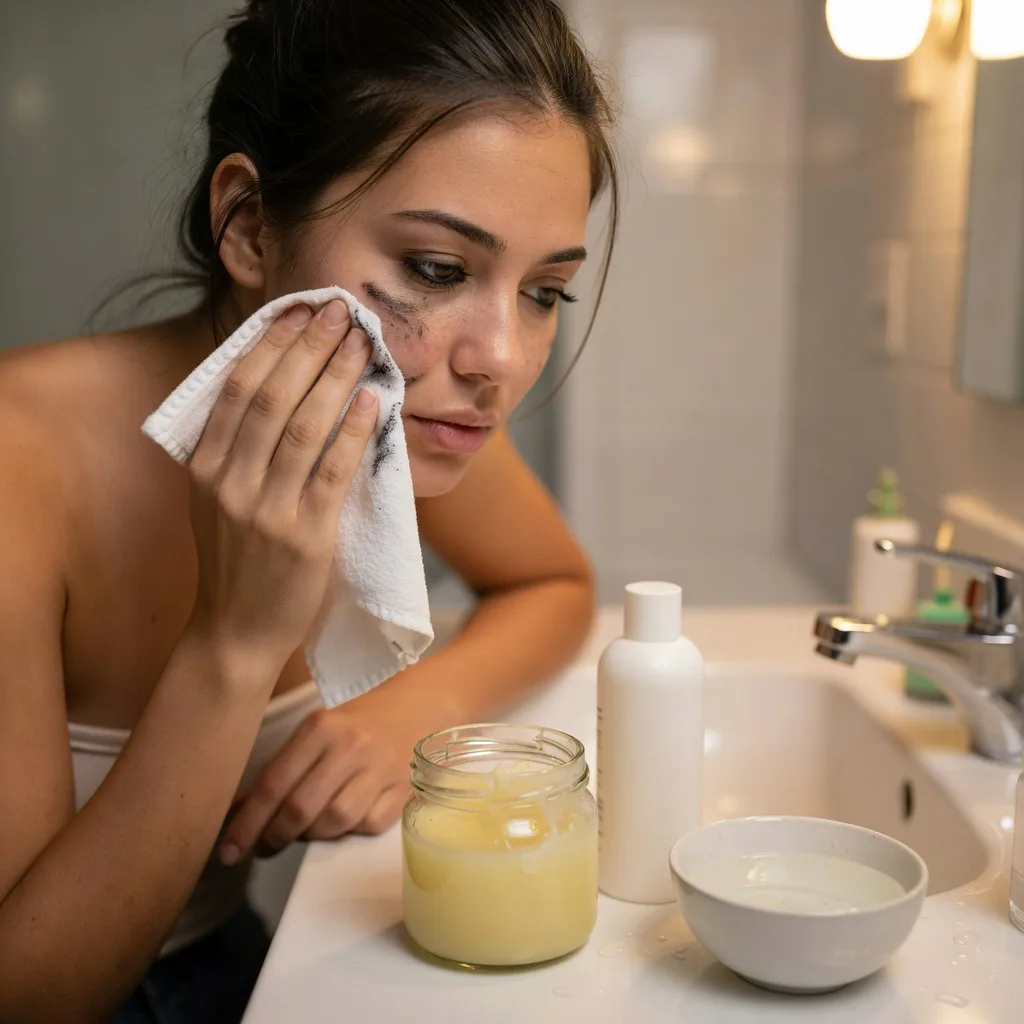
The dermatologically preferred approach: soak a cotton pad with a cosmetic oil or cleansing balm and hold it gently against closed eyelids for 10 to 20 seconds before wiping, never rubbing. This lets the product dissolve the waterproof film before you apply any physical pressure, rather than trying to scrub it off directly. This is sound dermatologic guidance based on how these formulas are built, though it isn’t backed by a dedicated randomized trial, worth flagging honestly.
Long-Wear and Full-Coverage Formulas
Long-wear foundations and full-coverage products often rely on the same film-forming technology used in waterproof mascara and liner, silicone-based polymers and film formers designed specifically to resist transfer and water contact throughout the day. That’s a genuine functional benefit for wear time, but it also means a quick pass with a basic cleanser frequently isn’t enough to fully dissolve the film, leaving a thin invisible residue that can contribute to clogged pores overnight if it isn’t properly removed.
This is one more reason the double-cleanse approach, an oil or balm step first, followed by a water-based cleanser, tends to outperform a single-step routine for anyone wearing long-wear or full-coverage makeup regularly, rather than just occasionally. Checking your skin under bright light after cleansing, looking for any remaining tint or sheen along the hairline and jaw, is a simple, practical way to confirm you’ve actually gotten a full-wear formula off rather than just the visible portion.
Do This, Not That
Do
- Reach for a cleansing balm, oil, or micellar water first if you have any on hand
- Massage a gentle cleanser into completely dry skin before adding water, for a real double cleanse
- Let a cotton pad with oil sit against closed eyelids before wiping waterproof makeup
- Choose a lower-comedogenic-rated oil if you’re acne-prone
- Treat comedogenicity ratings as a rough guide, not a precise prediction
Don’t
- Use mayonnaise or other food condiments as a facial makeup remover
- Rub or tug at waterproof eye makeup to speed up removal
- Assume every “natural oil” suggestion online is equally reasonable
- Skip a second cleanse if heavy or waterproof makeup remains after the first pass
- Use an oil you know is comedogenic for your skin type as a daily routine
How to Double-Cleanse Without Remover
Start with completely dry skin and hands
Water added too early reduces an oil-based cleanser’s ability to bind with makeup and oil.
Massage in a cleansing oil, balm, or a lower-comedogenic oil
Work it gently over your whole face, including closed eyelids, for about 30 to 60 seconds.
Tip: For waterproof eye makeup, let the oil sit against closed lids for 10 to 20 seconds before wiping.
Add a small amount of water and emulsify
The oil will turn milky, this is the sign it’s ready to rinse away.
Rinse thoroughly
Use lukewarm water and a soft towel to pat, not rub, your skin dry.
Follow with a gentle water-based cleanser
This second cleanse removes any remaining residue and completes the double-cleanse method.
A Practical Note for Travel or Emergencies
If you’re genuinely caught without any cleanser, oil, or micellar water, a plain, unscented lotion or body moisturizer massaged in and wiped away with a soft cloth is a more reasonable stopgap than reaching for something from the kitchen, since a basic lotion is at least formulated for skin contact and doesn’t carry the contamination or allergen concerns that food products do. It won’t remove makeup as thoroughly as a purpose-built product, but it’s a genuinely lower-risk substitute for a single occasion than raiding the refrigerator.
The same logic applies to a hotel bar of gentle soap in a pinch, massaged in on dry skin first before adding water, following the same double-cleanse principle covered above. None of these emergency substitutes are meant to replace a proper routine at home, they’re simply a safer fallback than the food-based suggestions that circulate so persistently online.
When to See a Dermatologist
See a dermatologist if you develop persistent redness, breakouts, or irritation that seems linked to a new makeup-removal method, or if you have a known food allergy and accidentally used a condiment-based remover and notice a reaction. If your actual goal is a deeper, more thorough cleanse rather than just makeup removal, our guide to deep pore cleansing at home covers how to layer that step in safely afterward.
Frequently Asked Questions
How do you get makeup off without makeup remover?
A cleansing balm, oil, micellar water, or a double cleanse with a gentle cleanser on dry skin all work well.
Does micellar water actually work without rinsing?
Yes, its micelle structure is designed to lift makeup away without a rinse, though some skin types feel better rinsing afterward.
Is mayonnaise a safe makeup remover?
No, it’s not formulated for facial use, isn’t sterile, and adds contamination and allergen risk with no advantage over plain oil.
Which oils are safest for acne-prone skin?
Squalane, sunflower oil, and cosmetic-grade mineral oil rank lowest on the comedogenicity scale.
Are comedogenicity ratings scientifically reliable?
They’re a useful rough guide but come from decades-old rabbit-skin assays, not modern human clinical trials.
How do you remove waterproof eye makeup safely?
Hold an oil-soaked cotton pad against closed lids for 10 to 20 seconds before wiping gently, never rubbing.
What is the double-cleanse method?
Massaging an oil-based cleanser into dry skin first, then following with a water-based cleanser second.
Can I use coconut oil to remove makeup?
It works mechanically but has a high comedogenicity rating, so it’s not ideal for acne-prone skin.
Is jojoba oil a good makeup remover?
Yes, it’s structurally similar to natural sebum and generally well tolerated.
When should I see a dermatologist about makeup removal?
If you develop persistent irritation, breakouts, or an allergic reaction linked to a removal method.
The Bottom Line
You don’t need a dedicated makeup remover to get makeup off effectively. Cleansing balms and oils, micellar water, and a properly done double cleanse with a gentle cleanser all work through real, understandable mechanisms, and low-comedogenic cosmetic oils are a reasonable backup.
What doesn’t hold up is reaching for food condiments like mayonnaise, which add contamination and allergen risk without any real advantage over plain cooking oil. Be gentle with waterproof and eye-area makeup specifically, letting product dwell before wiping rather than tugging, and you’ll get a genuinely effective, low-risk routine without needing a specialized product.