
De-Tan Facial: The Two Mechanisms Marketing Blurs
A de-tan facial promises to erase sun-darkened skin fast, and the honest answer requires separating two genuinely different mechanisms that marketing routinely treats as one thing.
Exfoliation sheds already-pigmented dead cells faster than they’d naturally shed, a real, quick effect, while tyrosinase-inhibiting actives like arbutin, kojic acid, and vitamin C slow future melanin production over weeks, they don’t erase pigment that’s already there. A real comparative trial even found 5% arbutin outperforming 4% prescription hydroquinone, a surprising, underused result.
Papaya enzyme, despite its popularity in de-tan marketing, is a plain exfoliant with no trial support for an actual whitening claim, and OTC hydroquinone remains illegal for sale in the U.S. for real safety reasons, including documented mercury-adulteration cases in unregulated products.
This guide covers what actually fades pigment and what doesn’t, the regulatory gap most content skips, a one-minute check for telling a tan from true hyperpigmentation, and why sun protection afterward matters more than most people realize.
Recommended Products for Brightening and Sun Protection
The Short Version
- “De-tan facials” work through two entirely different mechanisms, faster exfoliation of already-pigmented dead cells, and slower tyrosinase-inhibiting actives that reduce future melanin production, marketed as if they’re one thing.
- A real comparative trial found arbutin (5%) outperformed prescription-strength hydroquinone (4%) for pigmentation, a surprising, underused data point.
- Papaya enzyme is a proteolytic exfoliant, not a whitening agent, no rigorous trial supports a dedicated “skin whitening” claim for it.
- OTC hydroquinone is not FDA-approved for sale in the U.S., and mercury-adulterated “fairness” creams remain a documented, serious safety issue in unregulated markets.
- A de-tan facial is not a substitute for treating melasma or other true hyperpigmentation, which involves deeper, hormonally or inflammation-driven pigment deposits.
Jump to a Section
- What a Tan Actually Is, Biologically
- The Two Completely Different Things Called “De-Tanning”
- Ingredient by Ingredient: What Actually Fades Pigment
- The Study Where a “Natural” Ingredient Beat Hydroquinone
- Papaya Enzyme, Debunked as a Whitening Agent
- De-Tan Facial vs. Melasma Treatment
- The Melanin Turnover Timeline, Explained
- Do This, Not That
- A Realistic At-Home De-Tan Routine
- One-Minute Check: Is This Actually a Tan?
- The Regulatory Gap Nobody Mentions
- Why Sun Protection Afterward Matters More Than People Think
- Salon vs. At-Home: What Actually Differs
- When Fading Pigment Needs a Doctor, Not a Facial
- Frequently Asked Questions
- The Bottom Line
What a Tan Actually Is, Biologically
A tan is melanin, mostly eumelanin, produced by melanocytes in the basal epidermis in response to UV exposure, then transferred to surrounding keratinocytes that migrate upward through the epidermis over roughly a 28-day cycle in younger skin, stretching to 40 to 60 days in older skin. A “de-tan” treatment can only work on that process in one of two genuinely different ways, and most marketing never explains which one it’s actually using.
The Two Completely Different Things Called “De-Tanning”
Mechanical or chemical exfoliation, scrubs, enzyme peels, mild AHA or BHA, microdermabrasion-style facials, physically or enzymatically strips off the outer, most pigment-laden dead corneocytes faster than they’d naturally shed. This doesn’t remove melanin from living cells or stop new production, it just sheds already-pigmented dead skin faster, creating the appearance of a lighter, more even tone within days instead of weeks.
Tyrosinase-inhibiting actives, kojic acid, licorice extract, vitamin C, arbutin, azelaic acid, sometimes prescription hydroquinone, interfere with the enzymatic pathway inside melanocytes that produces new melanin. These genuinely reduce future pigment formation over weeks of consistent use, but they do nothing to instantly erase pigment already deposited in skin. Any “instant” lightening from a single facial is exfoliation doing the work, not depigmentation, and conflating the two is the central myth in this category.
Ingredient by Ingredient: What Actually Fades Pigment
| Ingredient | Mechanism | Evidence Quality |
|---|---|---|
| Hydroquinone (4%, prescription) | Direct tyrosinase inhibition | Strong, decades of physician-supervised use; not OTC-legal in the U.S. |
| Arbutin (5%) | Tyrosinase inhibition (hydroquinone-glycoside derivative) | Real comparative trial data; promising, not definitive |
| Kojic acid | Fungal-derived tyrosinase inhibitor | Strongest in combination formulas; can irritate, unstable unformulated |
| Licorice extract / glabridin | Multiple biochemical pathways (in vitro) | Mostly cell-line studies; poor real-world bioavailability |
| Vitamin C | Antioxidant, mild tyrosinase interference | Stronger as a general brightener than a dedicated depigmenting agent |
| Papaya enzyme (papain) | Proteolytic exfoliation only | No trial support for a whitening claim specifically |
The Study Where a “Natural” Ingredient Beat Hydroquinone
A comparative study in Fitzpatrick skin types IV and V (two-phase design, starting at 28 participants and completing with 26, measured objectively with a Mexameter) found that 5% arbutin outperformed 4% hydroquinone in reducing pigmentation versus control, with 20% azelaic acid and a kojic-acid/glycolic-acid blend also showing significant lightening. That’s a genuinely surprising, citable, and underused fact, a “natural” derivative outperforming the gold-standard prescription bleaching agent in a real comparative trial. The authors themselves flagged real limitations though: a non-randomized design, a small sample, and short follow-up, so it should be read as promising, not definitive.
Papaya Enzyme, Debunked as a Whitening Agent
Red flag: papain is a proteolytic enzyme that breaks down keratin and dead-skin protein, mechanistically an exfoliant, similar to a mild chemical peel, not a melanin-inhibiting or whitening agent. No rigorous clinical trial supports a dedicated “skin whitening” claim for papain specifically. The “papaya removes tan” marketing line is really just the exfoliation mechanism relabeled as lightening.
De-Tan Facial vs. Melasma Treatment
| Factor | De-Tan Facial (Superficial UV Tan) | Melasma / True Hyperpigmentation |
|---|---|---|
| Cause | Recent UV exposure, sitting in outer dead-cell layer | Hormonal or inflammatory triggers, deeper pigment deposits over months |
| What Fixes It | Exfoliation plus time, or short-term tyrosinase inhibition | Often months of dermatologist-guided treatment: retinoids, azelaic acid, hydroquinone, sometimes laser |
A salon de-tan facial targeting superficial UV tanning is a shallower, faster intervention than treating melasma, and marketing frequently blurs this line, selling false hope to people whose real issue is hormonally driven hyperpigmentation that a facial simply isn’t built to reach.
The Melanin Turnover Timeline, Explained
Fact check: without any treatment at all, skin naturally sheds pigmented dead cells over roughly 28 days in younger skin, stretching to 40 to 60 days as skin ages, so a tan would eventually fade on its own regardless of any facial. A de-tan treatment’s real contribution is compressing that natural timeline, not doing something biologically unavailable to skin otherwise. That’s a useful baseline for judging whether a product is actually accelerating fading or just coinciding with a tan that was already going to fade on its own within a few weeks.
This baseline also explains why consistency matters more than intensity: a gentle exfoliating routine used several times a week for two to three weeks will typically outperform one aggressive single session, since it’s working with the skin’s own turnover cycle rather than trying to force a result the mechanism doesn’t support in a single pass.
Do This, Not That
Do
- Understand whether a product is exfoliating or tyrosinase-inhibiting before judging its speed
- Wear strict SPF for several days after any exfoliating treatment
- See a dermatologist if pigment persists in sun-protected areas too
Don’t
- Expect a tyrosinase-inhibiting active to work in a single session
- Assume “natural” ingredients like papaya bleach skin the way hydroquinone does
- Use unregulated OTC hydroquinone or unlabeled imported “fairness” creams
A Realistic At-Home De-Tan Routine
Gentle exfoliation, 2-3 times weekly
Use a mild AHA/BHA or enzyme product, not daily scrubbing, to speed shedding of pigmented dead cells without over-stripping the barrier.Add a tyrosinase-inhibiting active
Layer in vitamin C, azelaic acid, or arbutin for weeks of consistent use if the goal is reducing future pigment, not just this week’s tan.Strict daily SPF
Reapply broad-spectrum sunscreen daily, since new UV exposure resets the entire process.Give it real time
Expect visible change over weeks, not days, for anything beyond the surface-exfoliation effect.
One-Minute Check: Is This Actually a Tan?
Pro tip: compare a sun-exposed area to a routinely sun-protected one, like skin under a watch strap or waistband. If the sun-protected area shows similar darkening, or the color persists in patches regardless of sun exposure, it’s likely not simple UV tanning, and might be melasma or post-inflammatory hyperpigmentation instead, worth a dermatologist visit rather than another facial.
The Regulatory Gap Nobody Mentions
OTC hydroquinone products are not FDA-approved for sale in the United States, prescription formulations under a healthcare provider are the only legal route. Yet OTC “de-tan” and “fairness” products containing hydroquinone remain widely sold in unregulated markets, especially where de-tan facials are a common salon service. Exogenous ochronosis, permanent blue-black or grey skin discoloration, is a documented, serious risk from prolonged or high-concentration hydroquinone use. The FDA has also issued explicit warnings about skin-lightening products illegally adulterated with mercury, a real, serious safety issue causing kidney damage and neurological symptoms, not a hypothetical one.
Why Sun Protection Afterward Matters More Than People Think
Freshly exfoliated skin has a thinner stratum corneum and is measurably more UV-sensitive for several days. A de-tan facial without strict post-treatment SPF can paradoxically make new tanning or sun damage worse within days, undercutting the entire point of the treatment, the same underlying mechanism behind aftercare advice for a microdermabrasion facial or any other exfoliating treatment.
Salon vs. At-Home: What Actually Differs
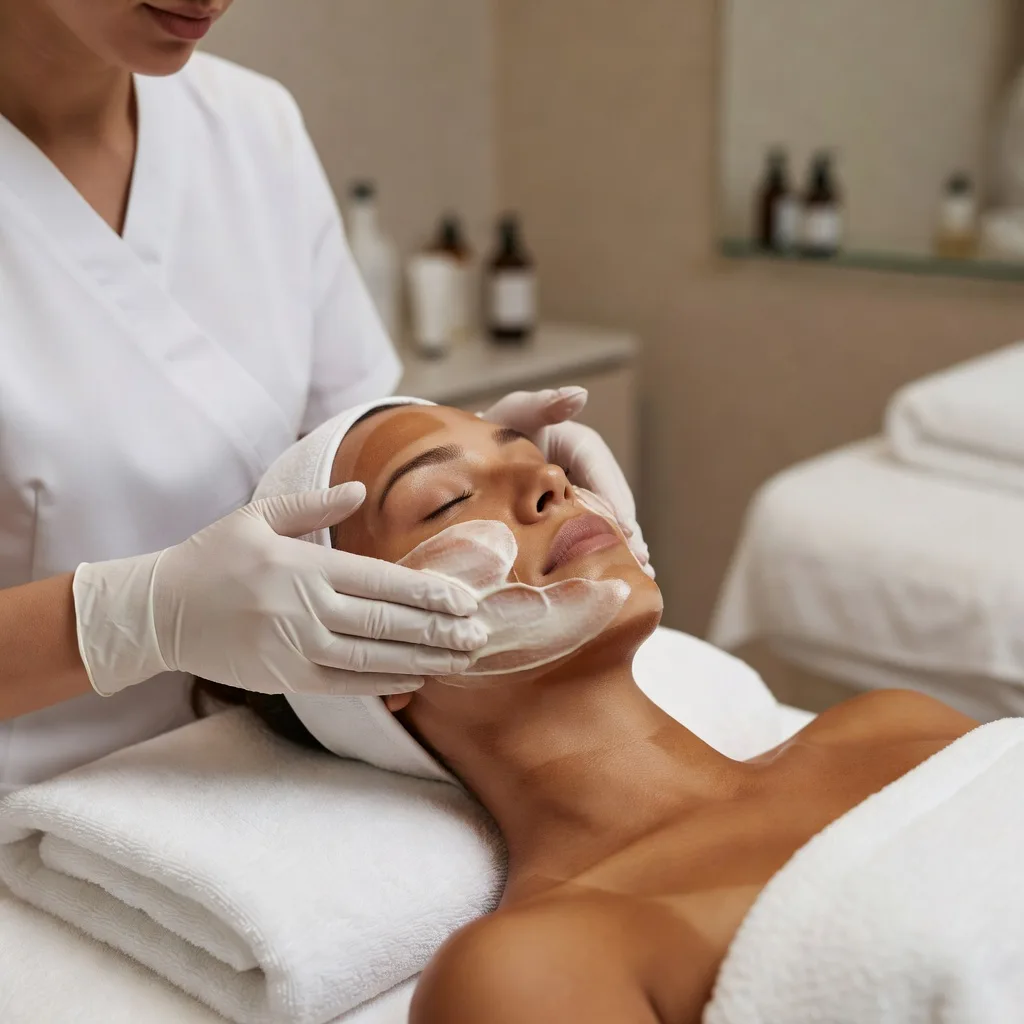
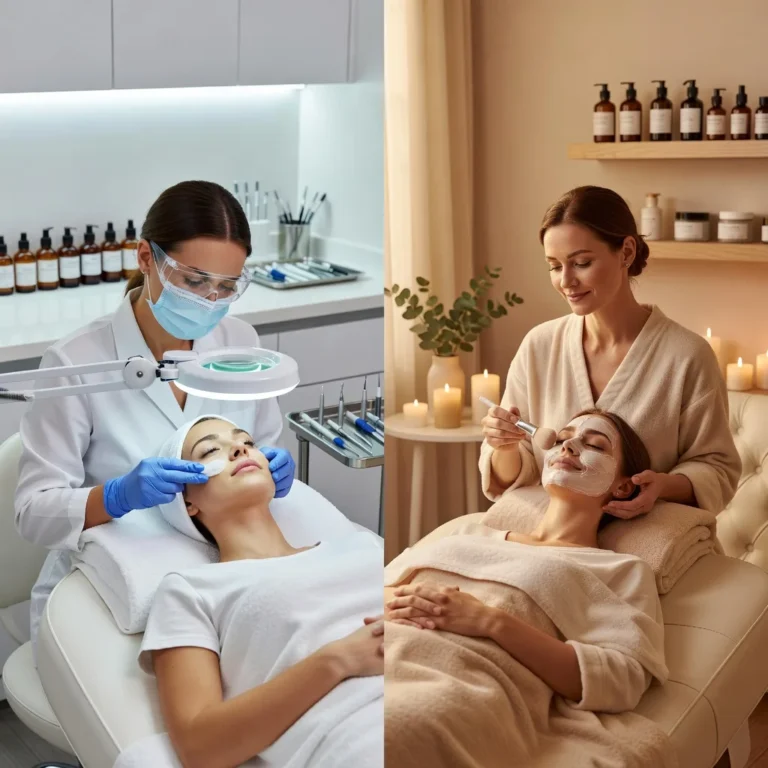
A professional de-tan facial typically layers several of the mechanisms above in one session, exfoliating scrub, an enzyme or mild acid mask, and sometimes a brightening serum applied under steam, which is why the visible result right after a session can look more dramatic than a single at-home product. That difference is mostly about combining several real mechanisms at once, not about a salon accessing some more powerful version of the same ingredients. An at-home routine using the same ingredient classes consistently over several weeks can reach a comparable result for the tyrosinase-inhibition half of the process, since that part depends on duration and consistency rather than a single intensive session.
When Fading Pigment Needs a Doctor, Not a Facial
See a dermatologist or skin specialist if pigmentation persists in sun-protected areas, appears in a symmetrical facial pattern typical of melasma, or doesn’t respond after weeks of consistent exfoliation and tyrosinase-inhibiting actives. Ongoing pigment changes deserve a real diagnosis rather than another round of de-tan treatments; consider whether it’s actually stress-related darkening or a hormonal driver before assuming sun exposure alone explains it.
Frequently Asked Questions
What is a de-tan facial?
A treatment using exfoliation and sometimes tyrosinase-inhibiting ingredients to speed the fading of superficial, sun-induced pigmentation.
Can a de-tan facial remove a tan instantly?
Only the exfoliation portion works quickly, by shedding already-pigmented dead cells faster; it can’t stop new melanin production in one session.
Does arbutin really work better than hydroquinone?
One real comparative trial found it did, though the study was small and non-randomized, so it’s promising rather than definitive.
Does papaya enzyme whiten skin?
No; it’s a proteolytic exfoliant, not a melanin-inhibiting agent, with no trial support for a dedicated whitening claim.
Is hydroquinone legal to buy over the counter?
Not in the United States; it’s prescription-only, though it remains available OTC in some unregulated markets.
Is a de-tan facial the same as melasma treatment?
No; melasma is deeper, hormonally driven pigmentation usually needing months of dermatologist-guided treatment.
Are mercury-containing skin-lightening creams a real risk?
Yes; the FDA has issued explicit warnings about mercury-adulterated products causing kidney and neurological harm.
Why does sunscreen matter more right after a de-tan facial?
Freshly exfoliated skin has a thinner, more UV-sensitive outer layer, so unprotected sun exposure can undo the treatment’s benefit quickly.
How do I know if it’s really a tan and not pigmentation?
Compare a sun-exposed area to a routinely covered one; similar darkening in both suggests something other than simple tanning.
How long does de-tanning actually take?
Exfoliation shows visible change within days; tyrosinase-inhibiting actives need weeks of consistent use to meaningfully reduce future pigment.
The Bottom Line
“De-tan facial” bundles two genuinely different mechanisms, fast exfoliation of already-pigmented dead cells and slow tyrosinase inhibition of future melanin production, under one marketing term. A real comparative trial even found arbutin outperforming prescription hydroquinone, a fact worth knowing before assuming “natural” ingredients like papaya do the same job through a different mechanism, they don’t.
Used with realistic expectations and consistent SPF, a de-tan routine can genuinely brighten superficial tanning. Used as a substitute for treating true hyperpigmentation or melasma, it will fall short, and that distinction deserves a dermatologist’s input rather than another salon visit.


One Comment