10 Best Acne Light Therapy Devices (2026): Masks vs Spot Tools
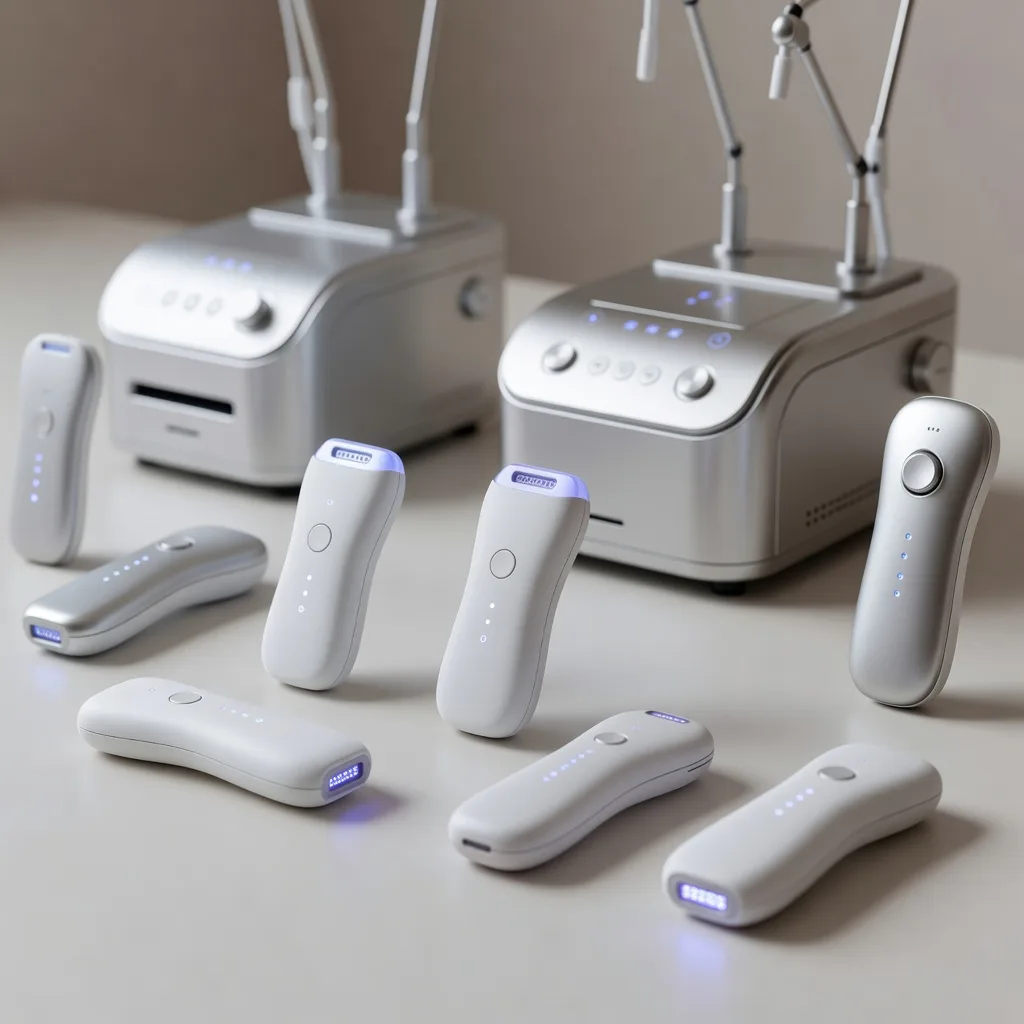
Acne light therapy devices shine blue light, and often red light, onto breakout-prone skin to target the bacteria and inflammation behind red pimples. This list covers 10 options, from full-face masks with a blue setting to small handheld tools for spot use, with notes on who each one suits and who should skip it.
The best acne light therapy device for most people is a blue and red light mask that covers the whole face, fits closely and protects the eyes, ideally with FDA clearance stated on the listing, which is a safety signal rather than a promise of clear skin. Blue light is the colour with the most evidence for acne, but home devices give modest results, mainly fewer red, inflamed pimples after several weeks of regular use. They work best for mild inflammatory acne alongside proven topicals such as benzoyl peroxide or adapalene. They do not clear blackheads, and they are not a treatment for cystic or nodular acne.
In short: choose a device with a real blue light setting in a format that matches where you break out, use it consistently for about eight weeks, and keep your usual acne treatment.
The American Academy of Dermatology explains that blue and red light can treat pimples but rarely clear acne on their own, and that devices sold for home use are less powerful than those used by dermatologists.
Below you will find the ten picks, how we chose them, which acne types light can help, masks versus spot devices, how to use one well and where the evidence runs out.
Shopping these picks?
Amazon Prime members get fast, free shipping on eligible items, plus Prime Video, Amazon Music and member deals. New members can start with a free trial.
Start a free Prime trialAged 18 to 24? Prime for Young Adults comes with a longer free trial and a lower price after it.
Affiliate link: we may earn a commission at no extra cost to you.
As an Amazon Associate we earn from qualifying purchases. This does not change which products we include.


In This Guide
- The 10 Best Acne Light Therapy Devices Right Now
- How We Chose These Products
- How Light Therapy Treats Acne
- Which Types of Acne Light Can Help
- Masks vs Spot Devices: Choosing a Format
- Features That Matter When Buying
- How to Get the Best Results From an Acne Light Device
- Side Effects and Who Should Avoid Light Devices
- Combining Light Therapy With Other Acne Treatments
- Dos and Don’ts
- Home Devices vs In-Clinic Light Treatment
- Honest Limits
- When to See a Dermatologist
- Frequently Asked Questions
- Final Word
Quick Answer
- HIME SAMA Miracle ACE is our top pick for its blue and red light, full-face fit and cordless one-touch use.
- Shark CryoGlow is the premium pick, with FDA clearance stated on its listing and a Skin Clearing preset.
- INIA GLOW 4D offers the softest fit, with flexible silicone, a blue mode and a cooling eye pad.
- Blue light targets acne bacteria; red light may calm inflammation.
- Masks suit spots across the face; handheld tools suit the odd pimple.
- Home light helps mild inflamed pimples, not blackheads or cysts.
- Keep benzoyl peroxide or a retinoid going and judge results at about eight weeks.
The 10 Best Acne Light Therapy Devices Right Now
These ten devices were shortlisted from widely reviewed Amazon listings and ranked by how well each one delivers blue light to breakout-prone skin, its fit or format, eye protection and how clearly the seller explains its use. The last three are handheld tools for small areas rather than full-face masks.
| # | Product | Best For | Standout Feature | |
|---|---|---|---|---|
| 1 | HIME SAMA Miracle ACE 8-Colour LED Mask | Spots across the whole face | Blue, red and near-infrared in one mask | View |
| 2 | Shark CryoGlow LED Mask FW312 | Breakouts plus puffy under-eyes | FDA-cleared with a breakout preset | View |
| 3 | INIA GLOW 4D Wireless LED Mask | Sensitive, easily irritated skin | Flexible silicone with a cooling eye pad | View |
| 4 | Aphrona Moonlight Pro LED Mask | Mild to moderate inflamed acne | Stated 415nm blue with FDA clearance | View |
| 5 | NEWKEY 4D Red and Blue LED Mask | First-time light therapy users | Simple red and blue with auto shut-off | View |
| 6 | INTEO Wireless LED Face and Neck Mask | Breakouts along the jaw and neck | Covers face and neck together | View |
| 7 | INIA FLARE 3-in-1 Red Light Device | Calming the odd inflamed spot | Red light with vibration in one | View |
| 8 | LifePro LumiCure Red Light Torch | Single spots and small patches | Portable torch for precise spot use | View |
| 9 | GLO24K LED Face and Neck Wand | Pairing light with a skincare routine | LED modes plus gentle vibration | View |
| 10 | Fxtiaa 7-Colour LED Face Mask | Occasional users and travel | Detachable design that packs down | View |
HIME SAMA Miracle ACE 8-Colour LED Mask
Best for: Spots across the whole face
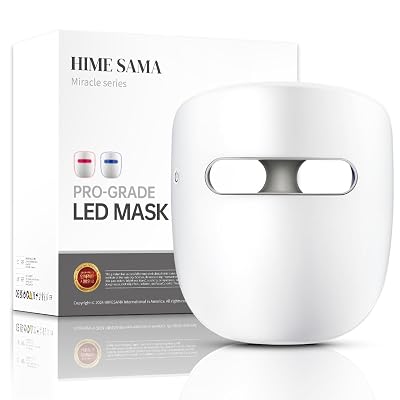
The HIME SAMA Miracle ACE is our top pick because it covers the whole face with a dense array of LEDs and includes the blue setting that matters most for acne, alongside red and near-infrared. For people whose breakouts appear on the forehead, cheeks and chin at once, a mask like this treats every area in one session instead of chasing individual spots.
Practical details help it stand out. It is cordless with a large rechargeable battery and one-touch control, so sessions fit into an evening routine, and a silicone eye holder plus adjustable chin pad help it sit steadily. Its listing does not state FDA clearance, unlike the #2 and #4 picks, and most of its eight colours have little evidence for acne.
- Eight light colours, including blue, red and near-infrared
- 240 LEDs powered by a 2000mAh rechargeable battery
- Cordless design with one-touch control
- Silicone eye holder and adjustable chin pad
Pros
- Covers the full face in one session
- Cordless use makes regular sessions easier
- Eye holder and chin pad help the fit
Cons
- Listing does not state FDA clearance
- Extra colours add little for acne
Skip it if: Skip it if FDA clearance is your main buying rule; the Shark or Aphrona picks suit you better.
Check Price on AmazonShark CryoGlow LED Mask FW312

Best for: Breakouts plus puffy under-eyes
The Shark CryoGlow is the premium choice for buyers who want a known brand and FDA clearance stated on the listing. It combines red, blue and deep infrared light, and its preset treatments include a Skin Clearing mode aimed at breakouts, which takes the guesswork out of choosing colours and session times compared with the manual settings on the #1 pick.
Its distinctive extra is under-eye cooling, which is a comfort feature rather than an acne treatment. The seller also describes the mask as clinically tested. Remember that clearance covers safety and intended use; it does not guarantee your acne will respond. It is bulkier and more complex than simple masks such as the NEWKEY, so it suits people who value presets over simplicity.
- Red, blue and deep infrared light
- Under-eye cooling built into the mask
- Preset programmes, including a Skin Clearing mode
- Listing states FDA clearance and clinical testing
Pros
- FDA clearance stated on the listing
- Dedicated preset for breakouts
- Established brand
Cons
- Cooling feature does nothing for acne itself
- More complex than a basic blue and red mask
Skip it if: Skip it if you only want a simple blue and red mask; the Aphrona covers the essentials with less to learn.
Check Price on AmazonINIA GLOW 4D Wireless LED Mask

Best for: Sensitive, easily irritated skin
The INIA GLOW 4D stands out for comfort. Its LEDs sit in flexible silicone that shapes to the face, which helps keep the light close to the skin on the nose, chin and jawline where rigid masks can gap. That close contact matters more for acne results than the number of colour settings a mask offers.
It has four modes, including a blue setting aimed at clearer-looking skin, plus dual near-infrared and a cooling eye pad. It is wireless, like the #1 pick, but offers fewer colours, which many acne-prone users will not miss. Its listing does not state FDA clearance, and its focus on red and near-infrared means blue is one mode among several rather than the main feature.
- 320 LEDs set in flexible silicone
- Four light modes, including blue
- Dual near-infrared settings
- Wireless, with a cooling eye pad
Pros
- Soft fit follows facial contours
- Cooling eye pad adds comfort
- Simpler mode choice than eight-colour masks
Cons
- Listing does not state FDA clearance
- Designed mainly around red and near-infrared
Skip it if: Skip it if you want a mask made mainly for acne; the Aphrona is more focused on blue light.
Check Price on AmazonAphrona Moonlight Pro LED Mask

Best for: Mild to moderate inflamed acne
The Aphrona Moonlight Pro is the most acne-focused mask on this list. Its listing names a 415nm blue wavelength for mild to moderate acne and a 630nm red wavelength, the two colours with the most research behind them, and states FDA 510(k) clearance as a Class II device. That is exactly the combination dermatology guidance points to.
It is UV-free and hands-free, so you can wear it while resting. It lacks the cooling, presets and near-infrared of the #2 Shark, but for acne those extras matter less than a clearly stated blue wavelength. Its simplicity is the main trade-off: there are fewer modes to explore, and it is still a home device with modest, gradual results.
- 415nm blue light aimed at mild to moderate acne
- 630nm red light
- Listing states FDA 510(k) clearance as a Class II device
- UV-free and hands-free
Pros
- Clearly stated acne wavelengths
- FDA clearance stated on the listing
- Focused design without filler colours
Cons
- Fewer modes and extras than premium masks
- Not intended for severe or cystic acne
Skip it if: Skip it if your breakouts are deep, painful cysts; those need a dermatologist, not a mask.
Check Price on AmazonNEWKEY 4D Red and Blue LED Mask
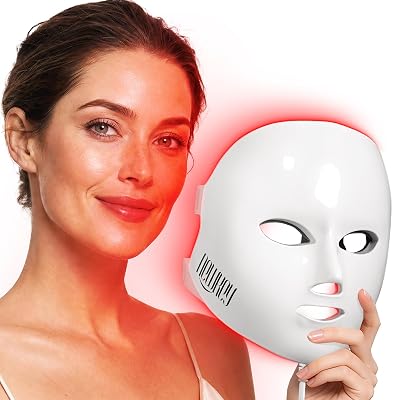
Best for: First-time light therapy users
The NEWKEY 4D is the easiest mask here to start with. It offers red and blue light only, the two colours that matter for acne, without a long menu of settings to work through. Sessions run for about ten minutes and the mask switches itself off, so there is little to learn before your first use.
It is corded rather than rechargeable, which gives steady power but ties you to a socket, unlike the cordless #1 and #3 picks. The listing does not state FDA clearance, so buyers who want that should look at the Aphrona instead. For someone curious whether light therapy helps their mild breakouts at all, its straightforward design is a sensible first step.
- Red and blue light settings
- Corded power supply for consistent output
- Ten-minute sessions
- Automatic shut-off
Pros
- Very simple to use
- Covers the two key acne colours
- Auto shut-off prevents overlong sessions
Cons
- Cord limits where you can use it
- Listing does not state FDA clearance
Skip it if: Skip it if you want to move around during sessions; a cordless mask such as the HIME SAMA suits you better.
Check Price on AmazonINTEO Wireless LED Face and Neck Mask
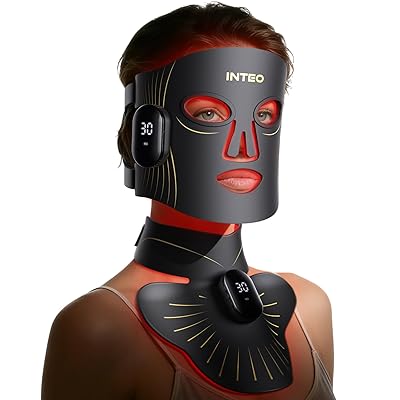
Best for: Breakouts along the jaw and neck
Many adults break out along the jawline and upper neck, areas that face-only masks miss. The INTEO mask extends coverage to the neck, so those spots get the same session as the cheeks and chin. It includes a 460nm blue mode among its four settings, a slightly longer blue wavelength than the 415nm named on the #4 Aphrona listing.
A rechargeable remote with a timer makes sessions simple to run, and the design is wireless. The listing does not state FDA clearance, and the larger shape can take a little more adjusting to sit close to the skin than the flexible #3 pick. It suits people whose breakouts clearly extend below the jawline.
- Mask covers both the face and neck
- Four modes, including 460nm blue
- Rechargeable remote control with timer
- Wireless design
Pros
- Reaches jawline and neck breakouts
- Timer built into the remote
- Blue wavelength stated on the listing
Cons
- Listing does not state FDA clearance
- Larger shape may need more adjusting
Skip it if: Skip it if your spots are only on the forehead and cheeks; a face-only mask is simpler.
Check Price on AmazonINIA FLARE 3-in-1 Red Light Device
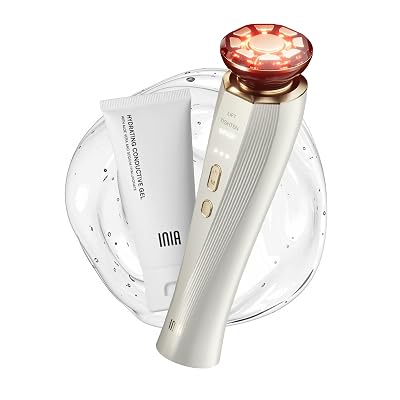
Best for: Calming the odd inflamed spot
The INIA FLARE is a handheld device rather than a mask, useful for people who want to treat small areas of the face and neck. It combines red light with vibration and offers modes described as Lift, Tighten and absorption, the last intended for use with skincare products. That makes it more of a general skincare tool than a dedicated acne device.
Its listing does not mention blue light, which is the colour with the most evidence for acne, so it is a weaker acne choice than the masks above. Red light may help calm individual inflamed spots, but expectations should be modest. It suits people who already manage breakouts with topicals and want a small multi-purpose tool, not those seeking an acne treatment.
- Handheld design for face and neck
- Red light combined with vibration
- Lift, Tighten and absorption modes
- Absorption mode for use with skincare products
Pros
- Small and easy to store
- Multi-purpose skincare tool
- Targets small areas precisely
Cons
- No blue light listed
- Must be held and moved during use
Skip it if: Skip it if acne is your main concern; a blue light mask such as the Aphrona is the better fit.
Check Price on AmazonLifePro LumiCure Red Light Torch

Best for: Single spots and small patches
The LifePro LumiCure is a small torch designed for spot use on small areas, which suits people whose skin is mostly clear apart from the occasional pimple. Instead of wearing a mask for every session, you hold the light over a single spot or a small patch on the chin, jaw or even the back of the shoulder.
It offers three wavelengths across red and near-infrared, a wrist strap and a zip case for travel. Its listing does not mention blue light, so it addresses inflammation rather than acne bacteria, and results on spots are likely to be modest. Compared with the #9 wand it is more targeted; compared with any mask it cannot help prevent new spots across the face.
- Handheld red and near-infrared torch
- Three wavelengths
- Wrist strap and zip case for portability
- Made for spot use on small areas
Pros
- Precise targeting of single spots
- Travels easily
- Useful beyond the face on small patches
Cons
- No blue light listed
- Slow if you have many spots
Skip it if: Skip it if you break out across the whole face; a full-face mask treats more skin at once.
Check Price on AmazonGLO24K LED Face and Neck Wand

Best for: Pairing light with a skincare routine
The GLO24K wand is a light-and-massage tool that glides over the face, jawline and neck. Its shaped head is designed to follow contours, and the seller suggests using it with serums and moisturisers, which suits people who like to build a device into their evening skincare rather than sit under a mask.
The listing describes multiple LED modes but does not clearly spell out a blue acne setting, so it is best treated as a general skincare device with a possible supporting role for breakouts. Because it is moved across the skin, each area gets a short dose compared with a mask. It is gentler and less targeted than the #8 torch.
- Multiple LED light modes
- Gentle vibration
- Ergonomic head for face, jawline and neck
- Designed for use with serums and moisturisers
Pros
- Fits easily into a skincare routine
- Covers jawline and neck
- Compact and easy to handle
Cons
- Listing does not clearly state a blue acne mode
- Moving wand gives each area a brief session
Skip it if: Skip it if you want a device made for acne; the Aphrona or Shark masks are more focused.
Check Price on AmazonFxtiaa 7-Colour LED Face Mask

Best for: Occasional users and travel
The Fxtiaa mask offers seven colours, including red and blue, in a detachable design that packs down for travel. For people who want mask coverage but do not plan to use it every day, the seller’s suggestion of two to three sessions a week makes it an easy device to keep up with around a busy schedule.
It is a simpler, less detailed listing than the other masks here: it does not state wavelengths, FDA clearance or specific eye protection, so check the manual and use goggles. Compared with the #5 NEWKEY it offers more colours, though for acne only blue and red are worth your time. It is a reasonable backup or travel mask rather than a first choice.
- Seven light colours, including red and blue
- Detachable design
- Portable for travel
- Suggested use of two to three sessions a week
Pros
- Packs down for travel
- Covers the two key acne colours
- Light weekly schedule
Cons
- Listing gives no wavelengths or FDA clearance
- Eye protection not detailed on the listing
Skip it if: Skip it if you want clear specifications; the Aphrona states its wavelengths and clearance.
Check Price on AmazonHow We Chose These Products
We shortlisted acne light devices from Amazon listings that are highly rated by a large number of shoppers, favouring established brands and fuller-featured models with a clear blue light setting, timers and eye protection. We then checked each product’s listed features against the safety and evidence guidance cited in this post, including the AAD’s advice on lights and lasers for acne, and ranked masks with blue light above red-only handheld tools.
These are research-based picks, not hands-on lab tests. We did not measure light output ourselves, so rankings reflect listing detail, design and fit rather than personal results. Only two picks, the Shark CryoGlow and Aphrona Moonlight Pro, state FDA clearance on their listings, and we have not assumed clearance for any other device.
- Strong ratings from a large number of shoppers
- Established brands and fuller-featured models preferred
- Listed features checked against the cited safety guidance
- Products with thin or unclear listings excluded or ranked lower
- Medical claims from listings not repeated as fact
How Light Therapy Treats Acne
The bacteria linked to acne naturally produce compounds called porphyrins. When blue light shines on the skin, porphyrins absorb it and trigger a reaction that damages the bacteria. Fewer bacteria can mean fewer and smaller red pimples.
Red light reaches deeper and is thought to reduce inflammation and support healing, which is why many devices combine the two. Because red light also soothes, combined devices are often more comfortable for people whose skin is irritated by other acne treatments. Neither colour unblocks pores, so they have little effect on blackheads and whiteheads, and neither reaches deep enough to shrink cysts or nodules. Light also does not change the oil production or clogged pores that start acne in the first place, which is why breakouts often return when treatment stops.
The AAD’s overview of lasers and lights for acne notes that multiple treatments give better results than one, that home devices must be used regularly over weeks, and that there is no way to know in advance who will respond.
Which Types of Acne Light Can Help
Matching the treatment to your type of acne is the most important step. Light helps some kinds of breakouts and does almost nothing for others.
| Acne type | What it looks like | Does light therapy help? |
|---|---|---|
| Papules | Small, red, tender bumps | Yes, often modestly |
| Pustules | Red bumps with a white or yellow centre | Yes, often modestly |
| Blackheads | Open pores with a dark plug | No |
| Whiteheads | Small closed bumps | No |
| Cysts and nodules | Deep, painful lumps | No; needs medical treatment |
| Acne marks and scars | Flat dark marks or dents | Not a proven treatment |
If your breakouts are mainly blackheads and small bumps along the jaw, our article on tiny pimples on the jawline explains causes and treatments that suit them better.
Masks vs Spot Devices: Choosing a Format
Acne light devices come in three main formats. The best one depends on how many spots you get and where.
| Format | How it works | Pros | Cons |
|---|---|---|---|
| Full-face mask | Covers the whole face at once | Treats all areas hands-free | Bulkier; needs eye protection |
| Handheld spot pen | Held over one pimple for a short cycle | Precise, small, travels well | Slow for many spots; no prevention across the face |
| Handheld wand or pad | Moved or held over small areas | Good for chin, jaw or back | Needs holding; sessions add up |
| Tabletop panel | Sits in front of the face | No contact with skin | Light is further away; large and costly |
People with spots across the forehead, cheeks and chin usually get more from a mask, because it treats skin where new spots are forming as well as existing ones. A spot pen suits people whose skin is mostly clear with the odd pimple. For breakouts on the back or chest, a larger pad or panel is more practical than a face mask, although these areas are harder to treat evenly at home. Our guide to the best LED facial mask for acne and wrinkles focuses on mask features in more detail.
Features That Matter When Buying
Devices often look similar, so look past the design and check the specifications.
- FDA clearance for acne, clearly stated by the seller.
- Blue light at a stated wavelength, usually around 415 nm, with or without red light around 630 to 660 nm.
- A built-in timer and automatic shut-off.
- Eye protection: built-in shields or included goggles.
- A close, comfortable fit for masks, or a flat treatment window for pens.
- A rechargeable battery or cord that suits how and where you will use it.
- Clear instructions on how often to use it and for how long.
A device offering many colours is not more effective for acne. Blue and red are the colours with the most evidence; extra settings are mostly for marketing.
How to Get the Best Results From an Acne Light Device
Follow your device manual for session length and frequency. These general steps help you use it well and judge whether it is working.
Photograph your skin
Take clear photos in the same light before you start so you can compare later.
Cleanse first
Wash with a gentle cleanser and pat dry so makeup and sunscreen do not block the light.
Protect your eyes
Use the shields or goggles supplied, especially with blue light.
Treat as directed
Run the full timed session and follow the recommended number of sessions per week.
Keep your acne treatment
Apply benzoyl peroxide, adapalene or other treatments at a different time of day.
Moisturise
Use a non-comedogenic moisturiser after the session and sunscreen each morning.
Review at eight weeks
Compare photos; if there is no clear change, the device may not suit your acne.
Put the device next to your toothbrush or on your bedside table. Acne light therapy only works with regular use, and making it part of an existing habit is the easiest way to stay consistent.
Side Effects and Who Should Avoid Light Devices
Acne light devices are low risk for most people. Mild dryness, warmth and temporary redness are the most common side effects.
Check with a doctor before using a light device if you take medicines that increase light sensitivity, such as some antibiotics or isotretinoin, have lupus or another light-sensitive condition, have a history of seizures triggered by light, or are pregnant. Stop using the device and seek advice if you notice burning, blistering, eye discomfort or new dark patches.
- Do not look directly into the light.
- Do not use it on broken, sunburnt or freshly peeled skin.
- People with darker skin tones should ask a dermatologist about pigmentation risk.
- Keep the treatment window clean between sessions.
Combining Light Therapy With Other Acne Treatments
Light therapy is best seen as a helper, not the main treatment. It pairs well with a simple, proven routine.
- Benzoyl peroxide: reduces acne bacteria and works well alongside blue light.
- Adapalene or another retinoid: unclogs pores and treats the blackheads light cannot reach.
- Salicylic acid: helps clear pores and small bumps.
- Gentle cleanser and non-comedogenic moisturiser: support the skin barrier during treatment.
The AAD’s acne skin care tips stress gentle cleansing, patience with treatment and not picking, which help any device work better. Picking also leaves the marks that light cannot fade; if you already have them, our guide on pimple scars that won’t fade covers options.
Dos and Don’ts
Helps
- Choose an FDA-cleared blue light device
- Match the format to your breakouts
- Use it on clean, dry skin
- Keep proven acne treatments going
- Judge results at about eight weeks
Backfires
- Expect it to clear cysts or blackheads
- Skip eye protection
- Use it on broken or sunburnt skin
- Stop sunscreen
- Delay seeing a doctor for severe acne
Treat the device as one part of a routine rather than a cure. It is also worth wiping the device after each session and storing it somewhere dry, since oil and makeup residue on the treatment window can reduce how much light reaches the skin. People who get the most from light therapy usually use it alongside at least one proven topical treatment.
Home Devices vs In-Clinic Light Treatment
Dermatologists also use light for acne, but in-clinic treatment differs from home devices in several important ways.
- Power: clinic devices deliver much more light energy in a session, so fewer sessions may be needed.
- Photodynamic therapy: a dermatologist may apply a light-sensitising solution before treatment, which makes the light more effective but causes more redness and peeling afterwards.
- Supervision: a professional chooses settings for your skin type and watches for side effects.
- Other options: clinics can combine light with extractions, chemical peels or prescription treatment in one plan.
- Convenience and cost: home devices are cheaper per use and fit into your routine, but results are usually milder.
For mild inflamed acne, a home device is a reasonable thing to try. For moderate acne, or if a home device has not helped after a fair trial, an appointment is usually a better use of time and money than a stronger gadget.
Honest Limits
The evidence for home acne light devices is real but limited. Studies are often small and short, and home devices deliver less light energy than those used in clinics. Some people see a clear reduction in red pimples; others see little or no change, and it is hard to predict who will respond.
Light does not unclog pores, does not treat cysts or scarring and does not prevent acne once you stop. For moderate or severe acne, prescription treatments are far more reliable, and waiting months with a device can mean more scarring.
Light therapy also works slowly. Weeks one to two usually show little change, people who respond tend to see fewer new red pimples by weeks three to five, and about eight weeks of consistent use is the fairest point to judge. If nothing has changed by then, try a different approach rather than continuing indefinitely.
When to See a Dermatologist
- You have painful cysts or nodules.
- Your acne leaves scars or dark marks.
- There is no improvement after two to three months of over-the-counter care.
- Acne appeared suddenly in adulthood or comes with irregular periods or excess hair.
- Acne is affecting your mood or confidence.
This article is for general information and does not replace professional medical advice. A board-certified dermatologist can diagnose your acne type and recommend treatment, including in-clinic light therapy if appropriate.
Frequently Asked Questions
Do acne light therapy devices work?
They can reduce inflamed pimples modestly, but results vary.
Is blue or red light better for acne?
Blue targets bacteria; red may calm inflammation; many use both.
Which devices on this list are FDA-cleared?
The Shark CryoGlow and Aphrona Moonlight Pro listings state FDA clearance. Clearance covers safety and intended use, not guaranteed results.
Is the most expensive acne light device worth it?
Not always. The Shark CryoGlow adds presets and cooling, but the Aphrona Moonlight Pro covers the key blue and red wavelengths.
Should I buy a mask or a spot device?
A mask such as the HIME SAMA for widespread spots; a torch such as the LifePro LumiCure for the odd pimple.
Which acne light device is best for sensitive skin?
A simple, soft mask such as the INIA GLOW 4D or NEWKEY 4D is easiest to start with; follow the manual.
How long until I see results?
Usually four to eight weeks of regular use.
Does light therapy help cystic acne?
No, cysts and nodules need medical treatment.
Can I use it with benzoyl peroxide?
Yes, at a different time of day.
Can I use it while on isotretinoin?
Ask your doctor first.
Final Word
The best acne light therapy device combines blue and red light in a format that suits where you break out; the HIME SAMA Miracle ACE is our top pick overall, with the Aphrona Moonlight Pro the most acne-focused.
Use it consistently alongside proven acne treatments, judge results at about eight weeks, and see a dermatologist for painful, scarring or persistent acne.
Our top pick: HIME SAMA Miracle ACE 8-Colour LED Mask
The HIME SAMA Miracle ACE takes the top spot because it pairs blue and red light with a full-face fit, a silicone eye holder and cordless one-touch use, which makes the regular sessions acne light needs easy to stick to. Choose the Shark CryoGlow instead if you want FDA clearance stated on the listing and a preset breakout mode, or the INIA GLOW 4D if a soft, flexible fit and cooling eye pad matter more to you.
Check Price on Amazon